

Key Takeaways
-
Arizona homeowners keep a green yard year-round by growing bermuda grass in summer and overseeding with winter rye from late September through October, creating a seamless two-grass cycle.
-
The best window to over seed a winter lawn in Phoenix, Gilbert, Mesa, Chandler, and Queen Creek is roughly October 1–20, when daytime temperatures are around 80 to 85 degrees and nighttime temperatures consistently stay below 65 degrees.
-
Perennial ryegrass is the preferred winter grass seed for a dense, beautiful lawn, but overseeding does increase water and maintenance needs compared to letting bermuda go dormant.
-
Applying starter fertilizer with at least 20% phosphorus after seeding and keeping the seed moist with 4 to 5 short irrigation cycles daily for 7 to 10 days are critical for successful winter overseeding.
-
Mesquite Landscaping, Inc. can design yards that balance real turf, artificial grass, hardscape, and desert plants so winter lawns look great while helping you conserve water.
Introduction: How Winter Lawns Work in Arizona
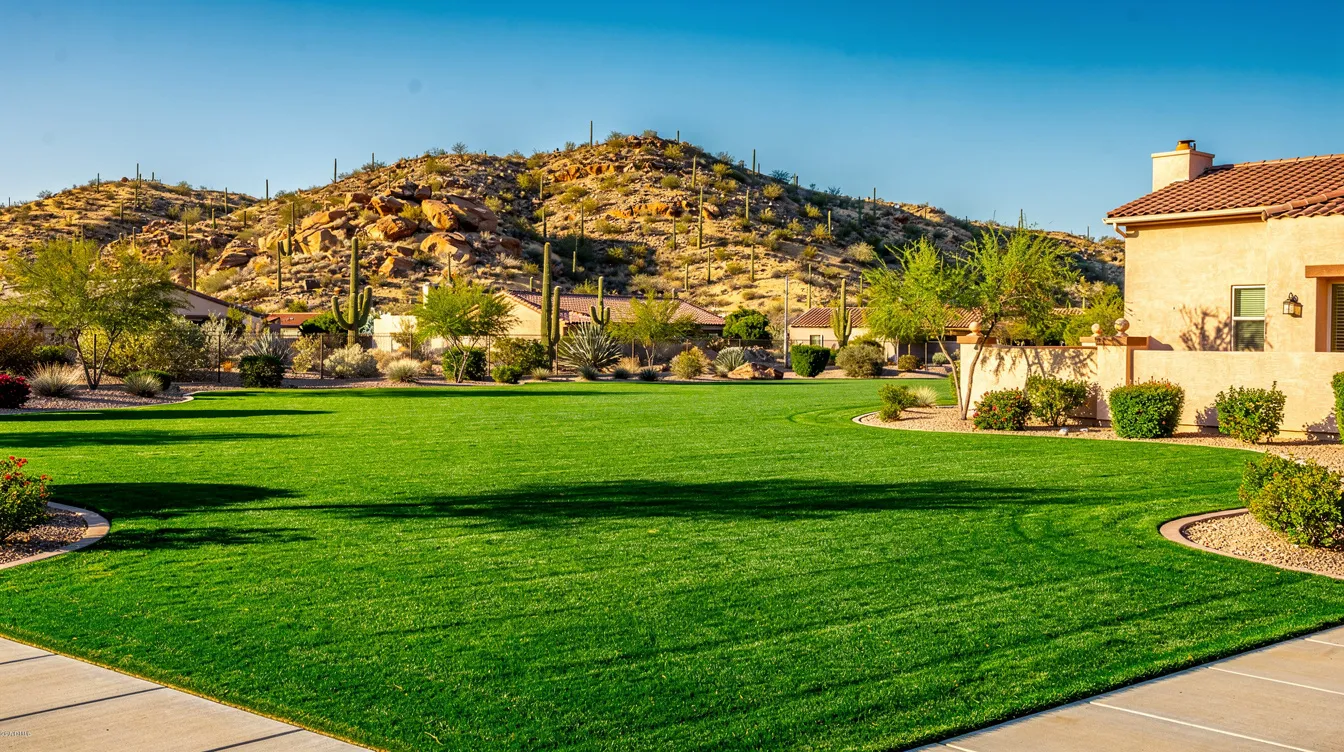
If you drive through any East Valley neighborhood in November, you will notice a sharp divide. Some yards are brown and straw-colored. Others glow with a deep, lush green lawn that looks like it belongs on a golf course. The difference is not magic-it is a winter lawn.
Overseeding is commonly used to maintain winter lawns in Arizona. The system is straightforward: warm-season bermuda grass thrives from May through September, then goes dormant as fall arrives. To keep the yard green, homeowners spread cool-season winter grass-typically perennial ryegrass-over the existing bermuda in early October. That ryegrass germinates, fills in, and carries the color from fall through early spring before the bermuda wakes up again.
A winter lawn in Arizona almost always means overseeding an existing bermuda yard with ryegrass seeds rather than starting from bare dirt. This guide walks through every step of the process, from choosing seed to watering schedules to spring transition, tailored specifically to Phoenix metro cities like Gilbert, Queen Creek, Mesa, Chandler, and San Tan Valley. It is written from Mesquite Landscaping, Inc.’s professional lawn care and landscape design perspective, so you will also find practical ideas for reducing overseeded area without sacrificing curb appeal.
Summer Grass vs. Winter Grass: The Arizona Lawn Cycle
Bermuda grass is the dominant summer grass across low desert regions of Arizona. It loves full sun, handles triple-digit heat, and stays green from roughly April through October. During peak summer months, a well-maintained bermuda lawn is thick, resilient, and practically bulletproof.
But warm-season grasses like bermudagrass go dormant during winter in Arizona’s lower-elevation deserts. When nighttime temperatures drop into the low 60s and 50s-usually late October to early November-bermuda slows down, stops growing, and eventually turns brown. Bermudagrass turns brown and dormant in winter temperatures below 32°F, but the plant is alive beneath the surface, waiting for spring warmth.
Winter grass is cool-season turf, typically perennial ryegrass, that grows well from about October through April in the Phoenix area. Perennial ryegrass provides a lush, green appearance in winter, filling the visual gap left by dormant bermuda.
To help you visualize the cycle:
|
Month |
Dominant Grass |
Lawn Appearance |
|---|---|---|
|
June |
Bermuda (peak) |
Deep green, thick, heat-loving |
|
October |
Transition period |
Bermuda fading, ryegrass emerging |
|
January |
Ryegrass (peak) |
Bright green, soft, cool-season texture |
|
April–May |
Transition period |
Ryegrass thinning, bermuda greening up |
Arizona’s elevation significantly influences the types of grass suitable for winter lawns. In high-elevation areas of Arizona, cool-season grasses like fescue can provide year-round green landscapes without overseeding. But for those of us in the low desert, the two-grass rotation is the standard approach to a beautiful lawn in both seasons-without permanently damaging the underlying bermuda or wasting excessive water.
Should You Overseed? Pros, Cons, and Water Use
Before buying a single bag of winter grass seed, it is worth honestly evaluating whether overseeding makes sense for your yard.
Advantages of winter overseeding:
-
Green curb appeal through the holiday season and into spring
-
A softer, more comfortable play surface for kids and pets during the cooler months
-
Reduced dust and soil erosion on exposed bermuda
-
Higher home appeal for resale or outdoor entertaining
Downsides to consider:
-
More water-a 225-square-foot overseeded lawn uses roughly 1,238 more gallons over a winter season compared to letting bermuda go dormant, and that number scales fast for larger yards
-
Additional lawn care: regular mowing, fertilizer applications, and monitoring for disease
-
Potential stress to the bermuda base if overseeding is mismanaged year after year
Letting warm-season grasses go dormant saves water compared to overseeding. In low desert areas, dormant bermudagrass can remain brown with minimal water inputs during winter-just enough to keep the root system alive. Some Arizona cities like Scottsdale actively encourage residents to skip winter lawns or selectively overseed only functional areas to reduce water consumption.
A practical middle-ground strategy: overseed only key zones like your front yard, backyard play areas, or high-visibility entries, and allow less-used bermuda sections to stay dormant. This lets you conserve water where it matters most while keeping the spaces you actually use looking sharp.
Mesquite Landscaping can help homeowners redesign spaces with more hardscape, artificial turf, and desert planting through their broader Arizona landscape design services to reduce the total overseeded area while keeping an attractive yard through every season.
Best Time to Plant Winter Grass in Arizona
Timing is the single most important variable in winter overseeding. Get it right and you will have a thick green lawn within a few weeks. Get it wrong and you are looking at patchy germination, wasted seed, or a bermuda lawn that fights back.
The recommended overseeding window for the Phoenix East Valley is early to mid-October, roughly October 1–20, adjusting a week earlier or later depending on actual weather conditions that year.
Temperature cues to watch:
-
Daytime temperatures should be around 80 to 85 degrees
-
Evening temperatures must consistently stay below 65 degrees
-
Soil at 2–4 inches deep should be cooling through the 65–70°F range
Overseeding too early-say late September when highs still push past 100°F-allows bermuda to outcompete ryegrass. The warm-season grass is still vigorous enough to smother delicate seedlings. On the other end, overseeding too late stunts seedling growth before establishment, because cold soil slows seed germination and early frost can damage fragile plants.
Your microclimate matters. South-facing yards in Mesa or Chandler with concrete walls may run several degrees warmer than an open lot in Queen Creek or San Tan Valley. Watch your own yard for visible cues: bermuda growth slowing, more frequent cool evenings, but before the first major cold front of the season.
Choosing the Right Winter Grass Seed
Ryegrass is the default winter grass in Arizona for good reason: fast germination, reliable color, and natural die-back around late April through May as temperatures begin climbing again.
The two main options:
|
Feature |
Perennial Ryegrass |
Annual Ryegrass |
|---|---|---|
|
Texture |
Fine, dense |
Coarser, lighter |
|
Color |
Deep green |
Lighter green |
|
Germination |
7–10 days |
5–7 days |
|
Durability |
Thicker turf, better weed resistance |
Thinner, cheaper |
|
Spring transition |
May linger slightly longer |
Dies off a bit easier |
|
Cost |
Higher |
Lower |
Perennial ryegrass is ideal for winter lawns in Arizona. It provides better frost tolerance and lawn quality than annual ryegrass, and it delivers the dense, dark green look most homeowners want. Annual rye is a budget option that still gives color, but homeowners aiming for a premium appearance should invest in high-quality perennial grass labeled for overseeding in desert climates.
Ryegrass achieves up to a 95% germination rate at optimal temperatures, meaning very little seed is wasted when you time things correctly.
When shopping at your local nursery or home improvement store, look for seed with low listed weed seed and inert matter percentages. Avoid mixes heavy in fescue or bluegrass-those varieties struggle badly in Arizona’s hot spring and will not transition off cleanly.
A common seeding rate is 12 to 15 pounds of perennial ryegrass per 1,000 square feet, though some homeowners go as low as 8–10 pounds for a slightly thinner look. The denser you want the lawn, the higher the rate.
Preparing Your Summer Lawn for Winter Overseeding
Proper preparation separates a thick, even winter lawn from a spotty disappointment. Start this process in late September to early October.
Step-by-step preparation:
-
Stop nitrogen fertilizer on the bermuda about 30 days before overseeding. This slows bermuda growth and reduces its ability to compete with incoming ryegrass.
-
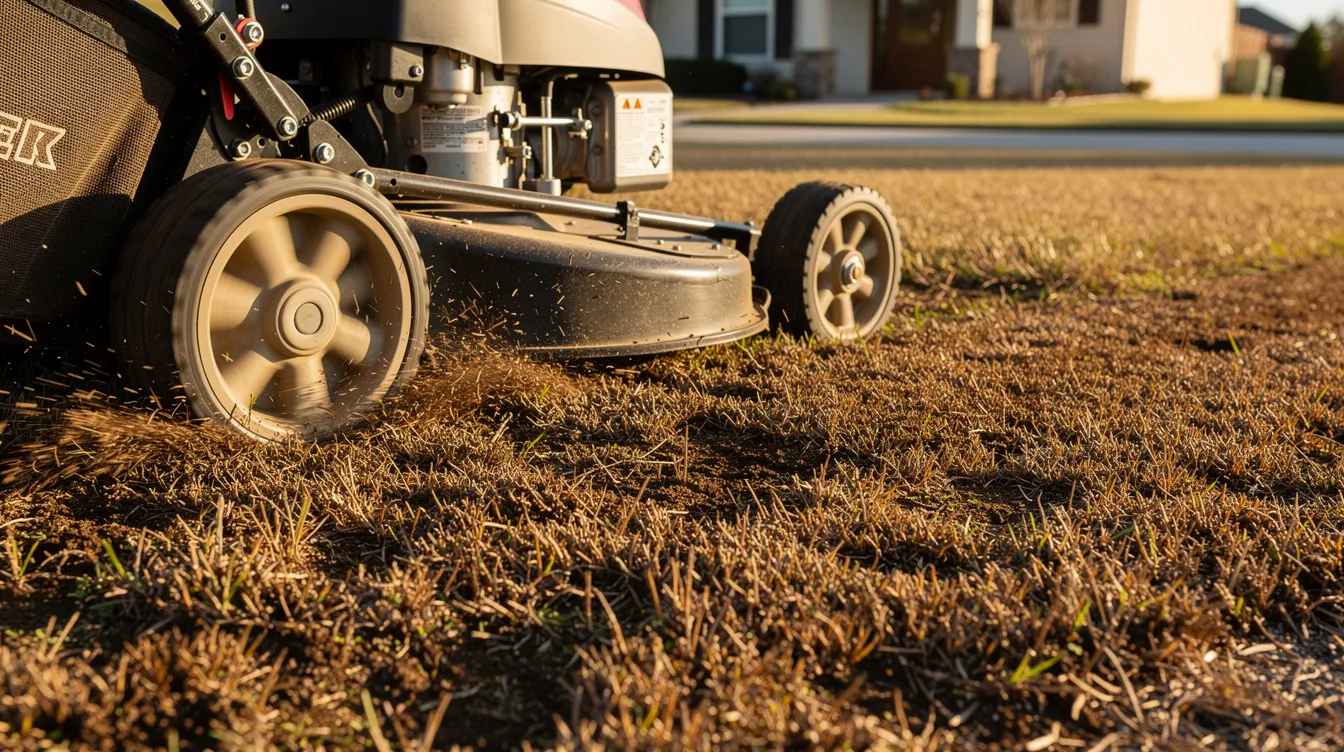
Gradually lower mowing height over 2–3 cuts. Scalp bermudagrass to 0.25 to 0.5 inches before overseeding. This removes the canopy so winter grass seed can reach the soil.
-
Remove clippings and thatch. Use a grass catcher or rake to clear debris. Winter grass seed needs direct contact with soil, not a layer of dead bermuda sitting on top.
-
Dethatch if needed. If your lawn has a heavy thatch layer, use a power rake or vertical mower to open it up. This step helps water and seed penetrate more evenly.
-
Reduce irrigation slightly during the final week before seeding. Cutting back on water nudges bermuda toward dormancy and reduces its competition with new seedlings.
If you have a sprinkler system, this is a good time to inspect and repair heads, check coverage uniformity, and adjust zones before you rely on the system for seed germination. Uneven coverage means uneven grass.
How to Spread Winter Grass Seed Evenly
Consistent seed distribution is worth the few extra minutes of effort. Tossing ryegrass seeds by hand almost always creates streaks and bare patches.
Use a broadcast spreader for the most consistent coverage. Here is the method:
-
Apply half the grass seed walking in one direction (north–south)
-
Apply the second half walking perpendicular (east–west) to cover in two directions
-
This cross-pattern eliminates gaps and reduces visible striping
Apply slightly heavier rates around high-traffic zones near patios, playsets, or entry paths. Go lighter along edges where seed might spill into rock beds or mulch.
After spreading, gently rake or drag the surface-a leaf rake turned upside down works well-just enough to tuck seed into the top quarter-inch of soil. Do not bury it deeper. A thin layer of top dressing with compost or manure can help retain moisture over the seed, but keep it light enough that you can still see seed through it.
Keep seed off concrete, pavers, and pool decks. Ryegrass will germinate in cracks and stain surfaces. Blow or sweep edges immediately after seeding.
Using Starter Fertilizer for a Strong Winter Lawn
A starter fertilizer is a nutrient blend with extra phosphorus to support root development in young grass plants. Products labeled something like 16-20-0 or 6-20-20 are typical choices.
Use a starter fertilizer with at least 20% phosphorus after seeding. The University of Arizona recommends about 5 pounds per 1,000 square feet of a phosphorus-rich formula, applied with a spreader at the label’s recommended rate to avoid burning tender seedlings.
If you recently fertilized bermuda heavily in late summer, adjust your application down slightly to avoid over-fertilizing. But in most cases, new seedlings genuinely benefit from this dedicated starter application because phosphorus drives root establishment-the single most important factor in seedling growth during those first few weeks.
After the winter lawn is established, switch to more balanced or nitrogen-focused fertilizers every 6–8 weeks through winter for sustained color. Mesquite Landscaping can recommend specific starter fertilizer products that work well in Arizona’s typically alkaline soils.
Note that dormant bermudagrass does not require fertilization during winter months. The starter and ongoing winter fertilizer is strictly for the ryegrass.
Watering Schedule for Germinating Winter Rye
Watering is where most winter lawns succeed or fail. The goal for the first 7–10 days is simple: keep the seed moist at all times without creating puddles.
Days 1–10 after seeding:
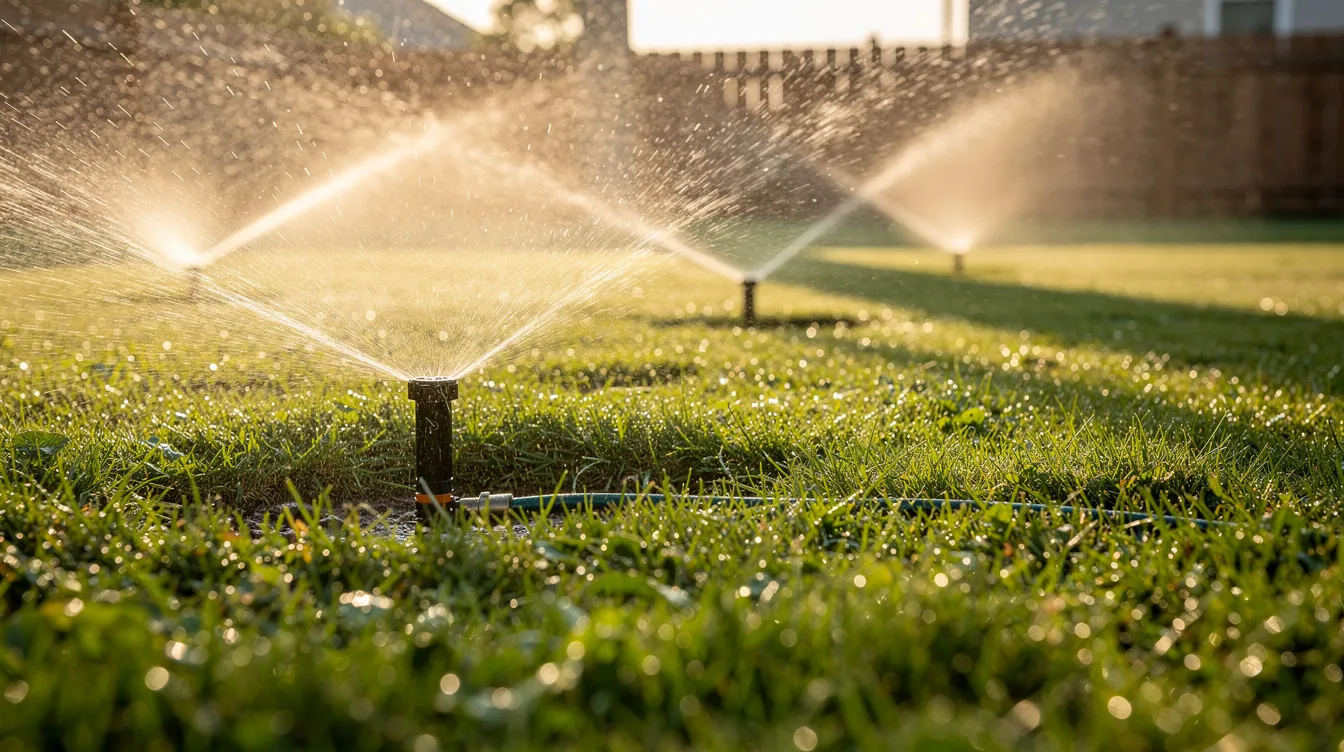
Water 4 to 5 times daily for 7 to 10 days. Each cycle should be short-just enough to wet the top half-inch of soil. Think 3–5 minutes per zone, depending on your sprinkler system output. Set your irrigation controller to multiple start times spread across early morning, mid-morning, early afternoon, and late afternoon.
Ryegrass germinates in 7 to 10 days at optimal temperatures, so you should see green fuzz emerging within a week if moisture stays consistent.
Days 10–21 (after germination):
When winter grass reaches about 0.75–1 inch tall, begin reducing frequency to 1–2 times per day. Watering should transition from frequent shallow irrigation to deep infrequent watering after germination. This encourages roots to push deeper into the soil rather than staying at the surface.
After establishment:
Move to every-other-day or every-third-day watering, adjusting based on temperature and wind. Shaded yards, north-facing lawns, and cooler pockets in Queen Creek may need slightly less frequent watering than full-sun south-facing yards in Chandler.
Overwatering a winter lawn promotes shallow roots and can invite winter weeds. The lawn should look evenly damp between cycles, never soggy with standing puddles. If you notice water pooling, reduce watering or shorten cycle times. For homeowners looking to upgrade their irrigation setup for better control, smart controllers with multiple start-time programming make the germination phase far easier to manage.
First Mow and Ongoing Winter Mowing
Resist the urge to mow too early. Let the ryegrass establish its root system before cutting.
Mow when ryegrass reaches 3 inches tall, cutting to about 2.5 inches. This typically happens 10–14 days after germination in Phoenix-area conditions. The first mowing is a milestone-it tells you the lawn is rooted enough to handle foot traffic and blade contact.
Ongoing mowing guidelines:
-
Never remove more than one-third of the grass blade in a single mowing
-
Most East Valley winter lawns need mowing every 7–14 days from November through March
-
Use a sharp blade to avoid shredding the finer winter grass blades, giving the lawn a cleaner, professional look
-
Clippings can usually be mulched back into the turf during winter to recycle nutrients, unless the lawn is excessively thick
-
If clippings clump heavily, use a grass catcher and spread them as compost elsewhere in the yard
Mow in the early morning when dew has dried but before afternoon winds pick up. This gives the cleanest cut and reduces moisture loss from freshly cut blades.
Fertilizing and General Winter Lawn Care
Feed established ryegrass lawns every 6 to 8 weeks with a slow-release nitrogen and iron fertilizer. Iron supplements-granular or liquid-deepen the green color without pushing excessive top growth the way pure nitrogen does. A word of caution: some iron products stain concrete and pool decking if not washed off promptly, so apply carefully near hardscape.
Fertilize established turf every 6 to 8 weeks in winter, typically with applications in November, January, and early March for a three-feed program.
Seasonal watering adjustments:
-
Reduce watering in cool December and January periods when evapotranspiration drops
-
Increase slightly again as March warms up and daylight hours lengthen
-
Always reduce watering if rain is in the forecast
Weed management: Good seed density and healthy turf are the best weed defense. A thick winter lawn crowds out most cool-season weeds naturally. If weeds do appear, spot-treat with products labeled safe for ryegrass rather than blanket-spraying the entire yard.
Keep traffic light during the first few weeks after germination. Once turf is well rooted-usually by the third or fourth week-gradually increase use for pets and play. You will know the lawn is ready when individual grass plants resist gentle tugging.
Transitioning Back to Bermuda in Spring
As daytime highs climb into the 90s from April through May, expect winter grass to thin and lose color. This is normal-not a sign of failure. Meanwhile, bermuda begins waking up beneath the fading ryegrass.
Spring transition steps:
-
Reduce watering to the winter lawn in late April. Less water accelerates ryegrass decline and gives bermuda more moisture access.
-
Scalp the winter lawn in late April or early May. Lower your mower to remove excess ryegrass top growth. This allows sunlight and warmth to reach bermuda stolons, speeding the wake-up process.
-
Apply a spring fertilizer formulated for bermuda (higher nitrogen) once night temperatures consistently stay above about 65°F. This feeds the summer lawn as it emerges.
-
Plant patience. In most East Valley lawns, winter rye dies out naturally over a few months and does not require physical removal. It simply decomposes into the soil, adding organic matter. A light rake pass can help clear any remaining dead ryegrass if you want to speed up the visual transition.
The spring season can look messy for a few weeks as one grass gives way to the other. That is completely normal. By mid-May, your summer lawn should be filling in strongly.
Designing a Smarter Yard: Blending Winter Lawns with Hardscape & Turf Alternatives
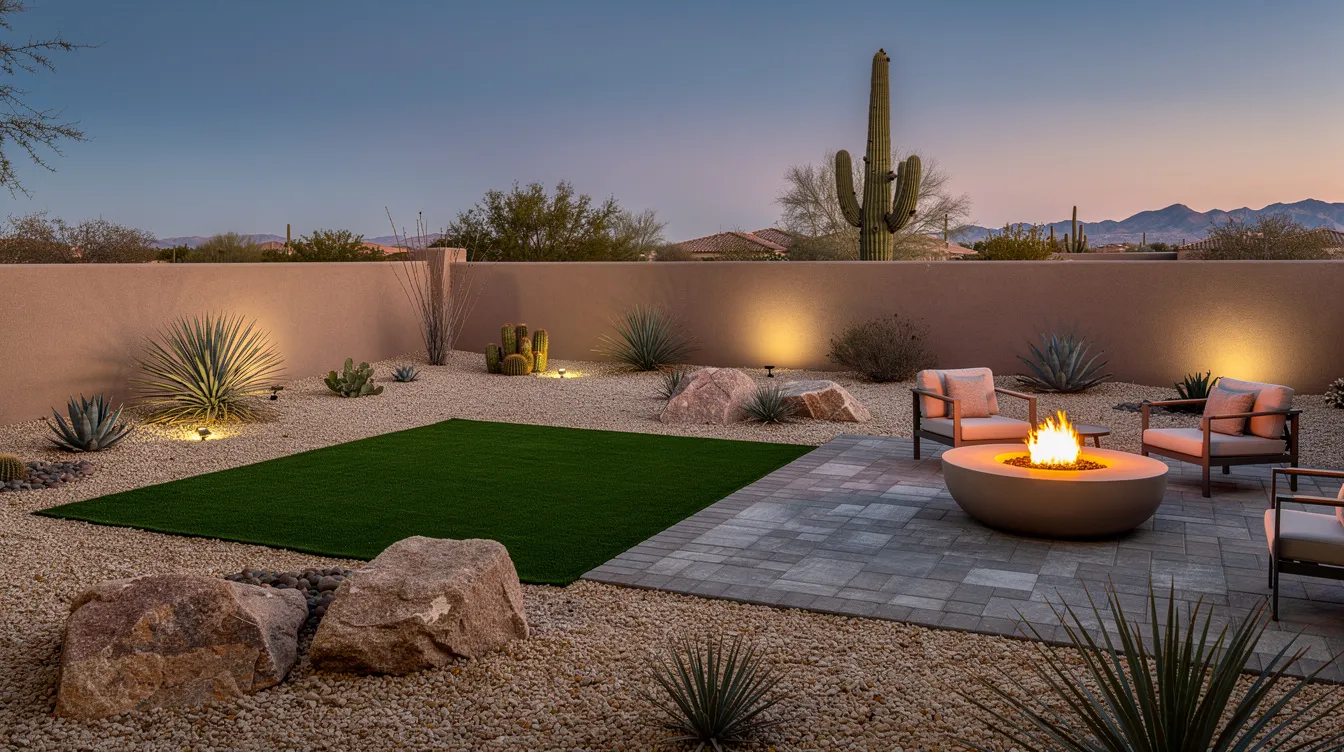
Rather than thinking “wall-to-wall grass,” consider designing functional lawn areas sized to how your family actually uses the yard. A 2,000-square-foot bermuda lawn that gets overseeded every fall costs significantly more in water and maintenance than a 600-square-foot play area surrounded by pavers, a fire pit, and desert plantings.
Mesquite Landscaping, Inc. creates 3D design visualizations as part of their expert landscaping and outdoor design in the Southeast Valley, showing combinations of real turf, artificial turf, paver patios, pergolas, and planting beds. Homeowners can preview how their yard will look in both winter (green ryegrass glowing under landscape lighting) and summer (bermuda, shade structures, pools).
Smaller, thoughtfully placed real-grass zones-say a central play lawn near an outdoor kitchen or fire pit-are easier and cheaper to over seed each fall. You use less seed, less water, and less fertilizer, while still having the texture and feel of natural turf where it matters.
Where artificial turf makes sense:
-
Shady side yards where grass struggles regardless of season
-
Putting greens and pet runs
-
Around pool decks where chlorine splash kills natural grass
-
Narrow strips between walls and walkways
Integrating low-water desert plants, expert garden design and planting beds, landscape lighting, and efficient irrigation systems means the yard remains attractive even where bermuda is allowed to go dormant in winter. The result is a yard that works for your lifestyle and your water bill through every season.
Lawn Care Mistakes to Avoid with Arizona Winter Lawns
Even experienced homeowners make these errors. Avoid them and your winter lawn will be noticeably healthier.
Timing mistakes:
-
Overseeding in late September when soil is still scorching and bermuda is still aggressively growing
-
Waiting until mid-November when soil is already too cold for fast seed germination
Preparation mistakes:
-
Skipping scalping, which leaves a thick bermuda canopy that blocks seed from reaching soil
-
Not dethatching when needed, resulting in seed sitting on top of dead organic material instead of soil
Seeding mistakes:
-
Using too little grass seed, resulting in thin, patchy coverage that lets weeds take hold
-
Using too much seed, creating a thatchy, disease-prone mat that chokes itself out
Watering mistakes:
-
Once-a-day deep watering right after seeding, which lets seed dry out between cycles
-
Continuous overwatering that rots seedlings and wastes more water than necessary
Long-term mistakes:
-
Never giving bermuda a break from overseeding year after year, which weakens the summer grass stand over time
-
Occasionally skipping overseeding or reducing the overseeded area helps keep your summer lawn strong for the long haul
How Mesquite Landscaping, Inc. Helps East Valley Homeowners
Mesquite Landscaping, Inc. is a full-service design-build landscape contractor serving Gilbert, Queen Creek, Mesa, Chandler, San Tan Valley, Gold Canyon, and nearby communities. We do not just plant grass-we help homeowners rethink how their entire yard functions across all four seasons with reliable and affordable landscape design in San Tan Valley.
Services relevant to winter lawns and year-round yard design: Homeowners can also choose from landscaping packages and pricing for East Valley homes that bundle design, installation, and key outdoor features.
-
Converting oversized turf areas to smarter layouts that reduce overseeded square footage
-
Installing or upgrading irrigation systems for efficient winter overseeding and summer watering
-
Adding hardscape features like patios, outdoor kitchens, and fire pits that replace high-maintenance turf zones
-
Full landscape design packages for new construction and backyard remodels, including new home landscaping for a perfect yard with turf, hardscape, and outdoor living features
We offer free design consultations and 3D landscape design videos, backed by a dedicated landscape customer care team, that let you preview how your yard will look in both winter and summer before any work begins. If you are tired of high water bills, heavy lawn care demands, or a yard that only looks good for a few months a year, we can answer questions about reimagining your outdoor space with the right mix of real grass, artificial turf, and low-maintenance desert landscaping.
Ready to plan before the next overseeding season? Contact Mesquite Landscaping, Inc. or reach out through our landscape design and lawn care contact page before early October to schedule any layout changes and irrigation upgrades so your yard is prepared when the temperatures drop.
FAQs About Winter Lawns in Arizona
How long does it take winter grass seed to germinate and fill in?
Ryegrass germinates in 7 to 10 days under optimal conditions when seeded in early to mid-October in the Phoenix metro area. You should see noticeable green coverage by the end of the second week. It usually takes about 3–4 weeks from seeding for a winter lawn to look fairly full and ready for regular use, assuming proper watering and starter fertilizer were applied. Perennial grass tends to fill in slightly slower than annual rye but produces a denser, more uniform result.
Can I start a winter lawn from bare dirt if I don’t have Bermuda?
You can seed winter rye on bare soil, but without bermuda underneath you will be left with bare ground again by late spring when temperatures rise and ryegrass declines. The perennial grass will not survive Arizona summers. If you do not have existing bermuda, consider establishing a warm-season base grass first, or consult Mesquite Landscaping about alternatives like artificial turf and expanded hardscape that maintain a green appearance year-round without the seasonal cycle.
Is it okay to let my dog use the lawn while the winter grass is establishing?
Light pet traffic is fine after germination, but heavy use during the first 2–3 weeks can create bare spots by compacting wet soil and tearing out seedlings. Keep pets off newly seeded areas until ryegrass is at least 2–3 inches tall, then gradually increase use while monitoring for thinning that may need spot reseeding with additional ryegrass seeds.
What if my HOA requires a green lawn in winter?
Review your specific HOA rules-some still require green winter lawns while others now allow dormant bermuda or partial overseeding. Where rules are flexible, homeowners can overseed only front entries or high-visibility strips and combine that with redesigned landscapes inspired by our Arizona landscape project gallery to reduce total overseeded area. If your HOA mandates full green coverage, focus on efficient irrigation and proper seeding rates to maintain the lawn without excessive water waste.
Can I overseed if I already installed artificial turf?
Artificial turf does not get overseeded. Its appearance stays the same year-round and does not require grass seed, winter watering, or seasonal maintenance. Many Mesquite Landscaping projects mix artificial turf in some zones with real bermuda and winter rye in others, giving homeowners the look and feel of natural grass where it makes sense while eliminating the work in areas where it does not, and our team is available through our contact Mesquite Landscaping designer page to help you plan the right balance.
