
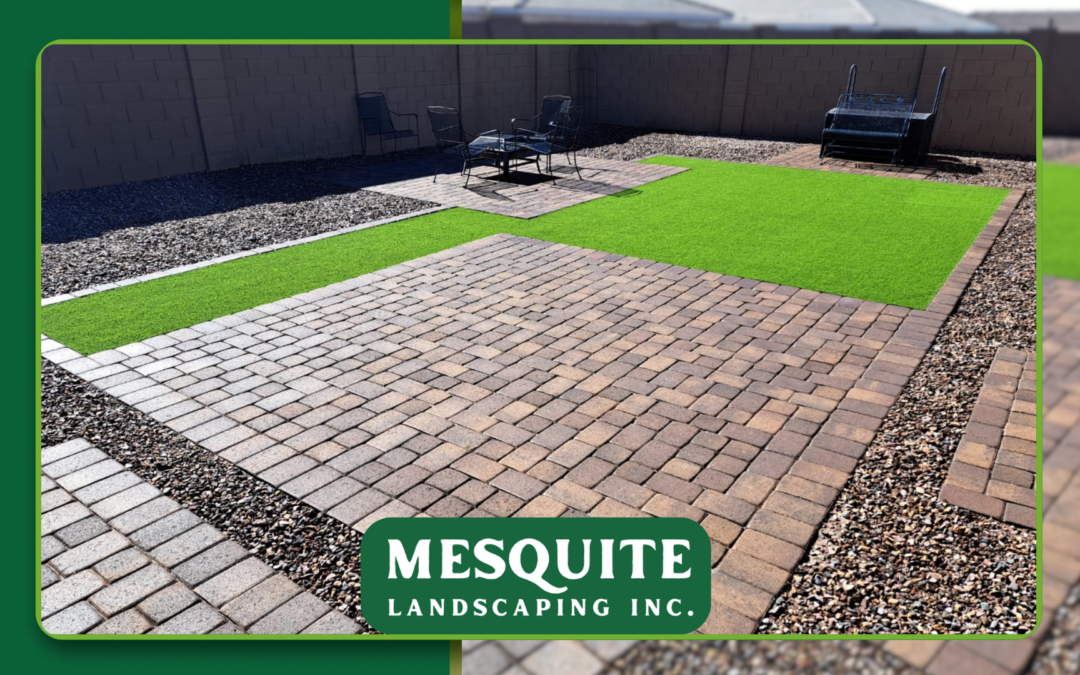
Arizona homeowners love the idea of a green, usable lawn without the constant watering – but the first question is always the same: how long does artificial turf last? The answer depends on what you buy, how it’s installed, and how much wear your yard actually sees. This guide breaks down realistic lifespans for every type of residential turf use in the East Valley, plus what you can do to get the most years out of your investment.
Key Takeaways
-
Artificial turf typically lasts between 8 and 25 years depending on usage, with most quality residential installations in Arizona performing well for 12–20 years.
-
Low-traffic decorative areas like a front yard can reach 20–25 years, while high-traffic areas such as dog runs and play zones typically see artificial turf lifespan reduced to 8 to 15 years.
-
Artificial grass lifespan hinges on product quality, installation workmanship, sun exposure, foot traffic, and routine maintenance – all amplified by the East Valley’s extreme UV and heat.
-
With Mesquite Landscaping’s professional design-build process, proper base preparation, and premium UV-stable turf products, most residential lawns in Gilbert, Mesa, Chandler, and surrounding cities should outlast their manufacturer warranty.
-
This article also covers when to replace artificial grass, how to extend your turf’s life, and whether artificial grass is worth the investment in Arizona’s desert climate.
What Is the Typical Lifespan of Artificial Turf in Arizona?
For Arizona homeowners, a well-chosen and professionally installed synthetic turf lawn will realistically last 15–20 years in a typical residential backyard. That’s not marketing fluff – it’s what installers across the East Valley consistently observe when high quality turf meets proper base work and basic upkeep.
Here’s how the numbers break out by scenario:
|
Use Type |
Expected Lifespan |
|---|---|
|
Decorative / low-traffic (front yards, pool surrounds) |
18–25 years |
|
Family backyards (moderate play, entertaining) |
12–20 years |
|
Dog runs, pet areas |
8–12 years |
|
Play zones, sport areas, putting greens |
8–15 years |
|
Most artificial turf products come with an 8 to 15 year warranty from the manufacturer, covering material defects and UV degradation. But actual performance regularly exceeds that range with proper care. Artificial turf can last 15 to 25 years with proper care in Arizona – the key variables are the product you choose, how the base is built, and how much abuse each zone takes. |
|
Arizona’s climate, especially in cities like Gilbert, Queen Creek, and Chandler, makes UV protection and quality backing critical to how long artificial turf lasts. Cheap fiber without proper UV inhibitors will fade and crack years before premium alternatives, as you can see in our landscape project gallery and client transformations.
Artificial Grass vs. Natural Grass: Longevity and Everyday Reality
A natural lawn in the East Valley fights an uphill battle from the day it’s planted. Natural grass requires constant upkeep like mowing and watering, and in Arizona’s heat, that means heavy irrigation – often 55 or more inches of water per year for full green coverage. Real grass in full-sun backyards frequently needs re-sodding or overseeding every few years just to stay alive, especially during summer.
Artificial grass stays green and functional for 12–20+ years without mowing, fertilizing, or seasonal replanting. That gives it a dramatically longer practical lifespan when you factor in how often a natural lawn needs to be repaired or replaced in desert conditions. And the water math is striking: artificial turf can save up to 50,000 gallons of water annually compared to irrigating a similarly sized natural lawn.
For busy homeowners dealing with water restrictions and triple-digit heat, a synthetic lawn delivers predictable, year-round performance that a struggling natural lawn simply can’t match. If you’re weighing the trade-offs, our breakdown of pros and cons of artificial turf for your Arizona backyard covers the full picture.
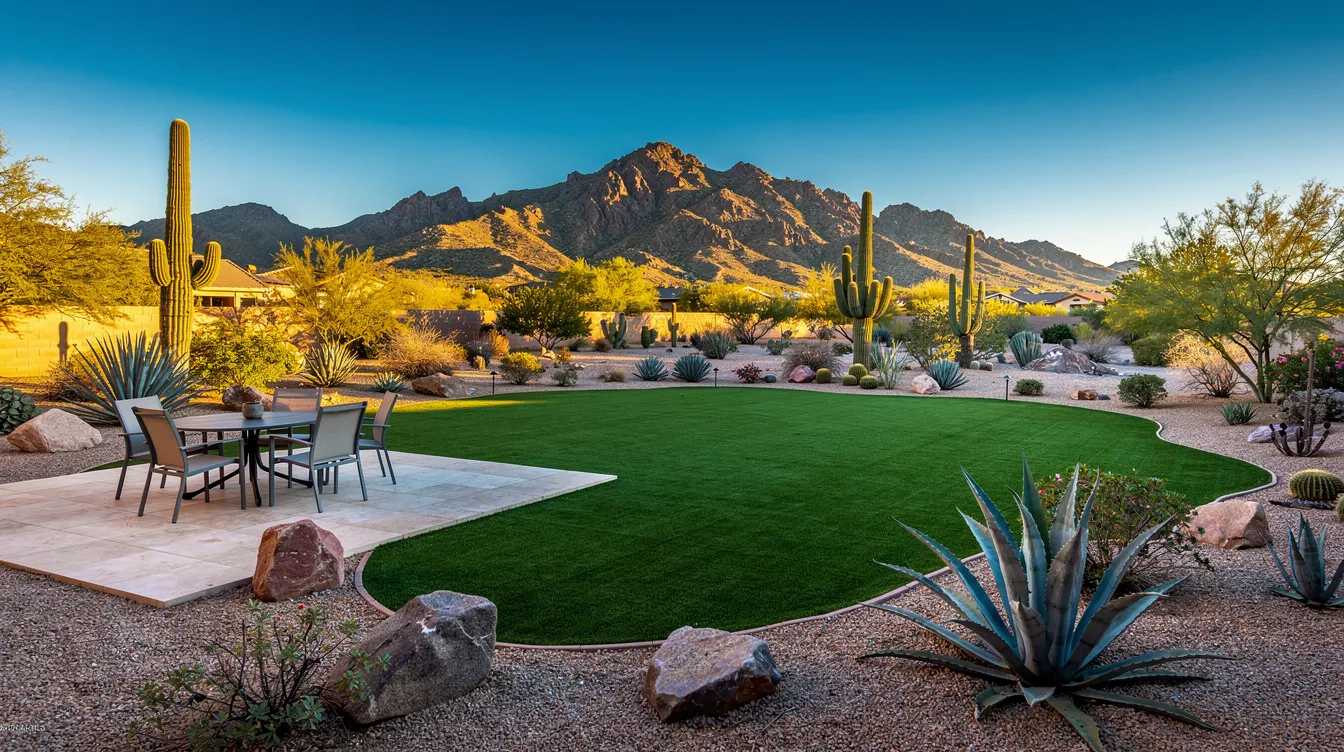
Key Factors That Affect How Long Artificial Turf Lasts
Not all artificial grass is created equal, and the lifespan of artificial turf in Arizona isn’t fixed. It’s shaped by a handful of core factors that homeowners can largely control:
-
Turf quality and materials – fiber type, UV stabilization, backing strength
-
Installation workmanship – base compaction, drainage, seam work
-
Foot traffic and usage – decorative vs. pets vs. sports
-
Sun exposure and climate – direct UV, reflected heat, monsoon drainage
-
Maintenance habits – brushing, rinsing, infill replenishment
Each factor directly influences whether your artificial lawn hits the 8-year mark or the 25-year mark. Here’s a deeper dive into each one.
Turf Quality and Materials
Material quality significantly affects artificial turf durability. The fiber polymer matters: polyethylene is the most common for residential lawns, offering a soft feel underfoot on bare feet and solid UV performance. Nylon handles high stress well but runs hotter. Polypropylene is lighter and stiffer, but less durable under heat and UV – it’s better suited for backing than grass blades.
What separates high quality synthetic turf from bargain rolls is UV stabilization. Under Arizona’s 300+ days of sun, UV-stabilized durable fibers with quality pigments resist fading and brittleness for 10–20 years. High-quality artificial grass can last up to 25 years, while cheap fake turf that looks fine at installation commonly flattens, fades, or breaks down 5–7 years early.
Backing construction matters just as much. A strong, multi-layer backing – primary woven material plus a secondary polyurethane or latex coating – prevents stretching, tearing, and seam failure. Blade shape also plays a role; fibers with a W, C, or diamond cross-section hold up better under traffic than flat blades.
At Mesquite Landscaping, Inc., we specify premium artificial grass products designed for desert climates and long-term performance through our partnership with TurfHub for premium artificial turf. You can learn more about how to choose the best artificial grass for Arizona yards to understand what to look for.
Installation Workmanship and Base Preparation
How long does artificial grass last? The answer depends as much on installation quality as on the turf itself. Proper installation prevents issues like wrinkling and sinking that lead to premature failure.
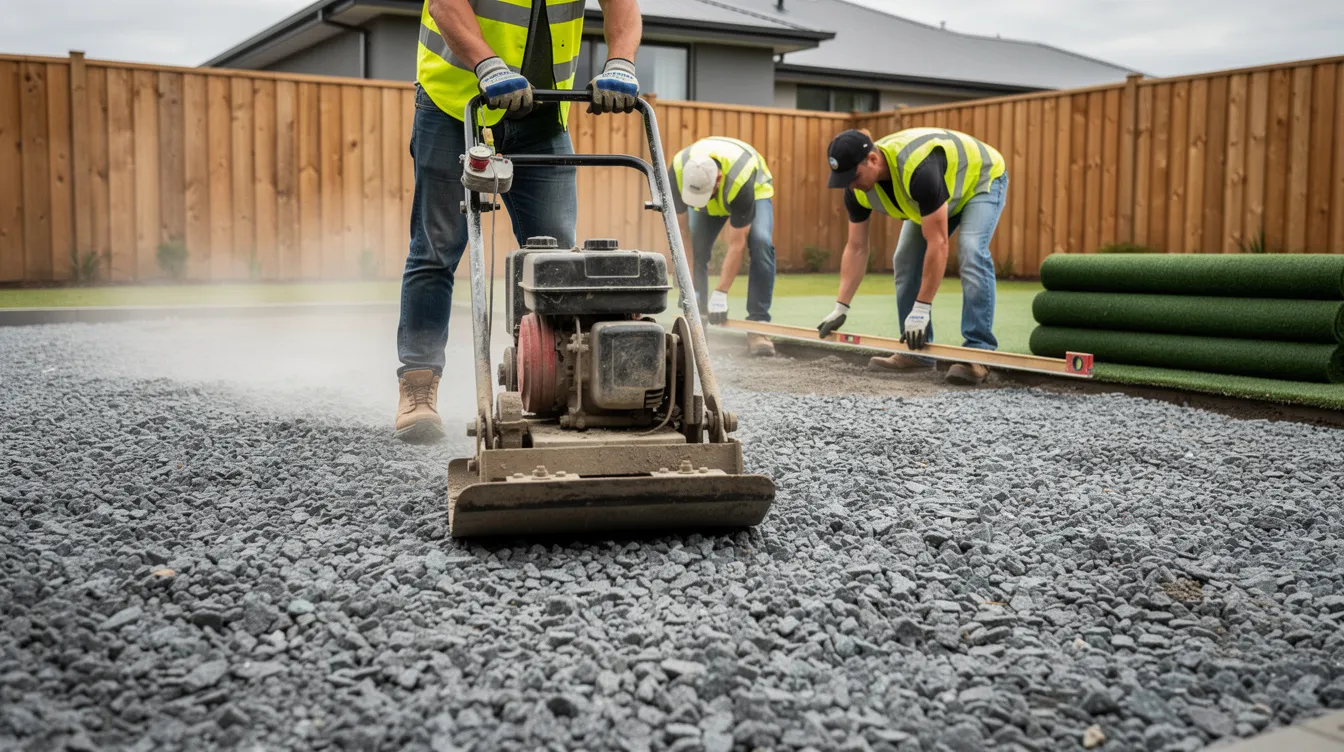
A proper base in Arizona involves:
-
Excavating native soil to the correct depth
-
Filling with compacted crushed rock or decomposed granite in layers
-
Grading for proper drainage and water run-off
-
Securing perimeter edging to anchor turf and prevent movement
A solid, well-compacted base eliminates sinking, ripples, and low spots that collect water and damage the backing from underneath. Properly glued and stretched seams, clean edge detailing, and correct turf infill depth help an artificial lawn handle years of foot traffic and the thermal expansion and contraction that Arizona’s temperature swings create.
Poor installation – whether DIY or from a low-bid contractor – often fails within 3–7 years due to seam separation, wrinkling, or drainage problems, even when the turf material itself is decent. Mesquite Landscaping handles grading, base prep, turf selection, and the full installation process as one integrated design-build project. If you’re exploring options, our artificial turf installation service page explains how we approach each step.
Foot Traffic and How You Use Your Artificial Lawn
Heavy foot traffic accelerates wear on artificial turf – that’s the single biggest variable in real-world lifespan. A decorative front yard that only sees light walking can comfortably exceed two decades. A dog run or kids’ play area under a swing set is a different story.
High traffic areas like these typically last 8–15 years:
-
Dog runs and pet “racetracks” along fences
-
Kids’ play zones with playsets or trampolines
-
Backyard paths used as daily shortcuts
-
Putting greens and sport areas with constant running and pivoting
Repeated activity compacts infill levels and mats turf fibers, especially in heavily used zones where movement is concentrated. Heavy foot traffic can flatten turf fibers over time if those zones aren’t maintained.
The fix is product matching. Choose tougher, denser fibers, reinforced backing, and pet- or sport-specific turf products for zones that will see more wear. Strategic design also helps – pavers for main walkways, gravel borders, and defined play pads can protect surrounding synthetic grass from excessive wear.
Arizona Climate, Sun Exposure, and Drainage
Arizona’s East Valley delivers over 300 days of sunshine, summer temperatures regularly exceeding 110–115°F, intense UV indices, dust storms, and heavy monsoon downpours. Every one of these stresses your synthetic turf differently.
UV exposure and climate can degrade artificial turf over time. Cheaper fake grass without proper uv protection fades, becomes shiny, or turns brittle – shortening the effective turf lifespan by years. UV resistant turf lasts longer in sunny climates, which is why it’s non-negotiable for Arizona installations.
Surface temperatures on synthetic turf can exceed air temperature by 30–40°F on peak summer afternoons. While quality turf won’t melt, some infill technologies and lighter-colored materials help moderate heat buildup for comfort on bare feet, and thoughtful desert landscape design for hot, sunny yards can add shade and cooler hardscape surfaces around the turf.
Proper drainage is critical even in a desert. Monsoon storms can dump enormous volumes of water in minutes. A well-graded base with perforated backing lets your artificial lawn drain efficiently instead of pooling water that damages backing and sub-base. Mesquite Landscaping pays close attention to drainage around pool decks, patios, and low spots so water moves off the turf rather than sitting under it.
One often-overlooked hazard: reflected heat from low-E windows and metal surfaces can focus intense energy on turf patches, causing melting or accelerated fiber breakdown. Most warranties specifically exclude this kind of damage, so adding pavers or hardscape buffers near reflective surfaces is smart planning.
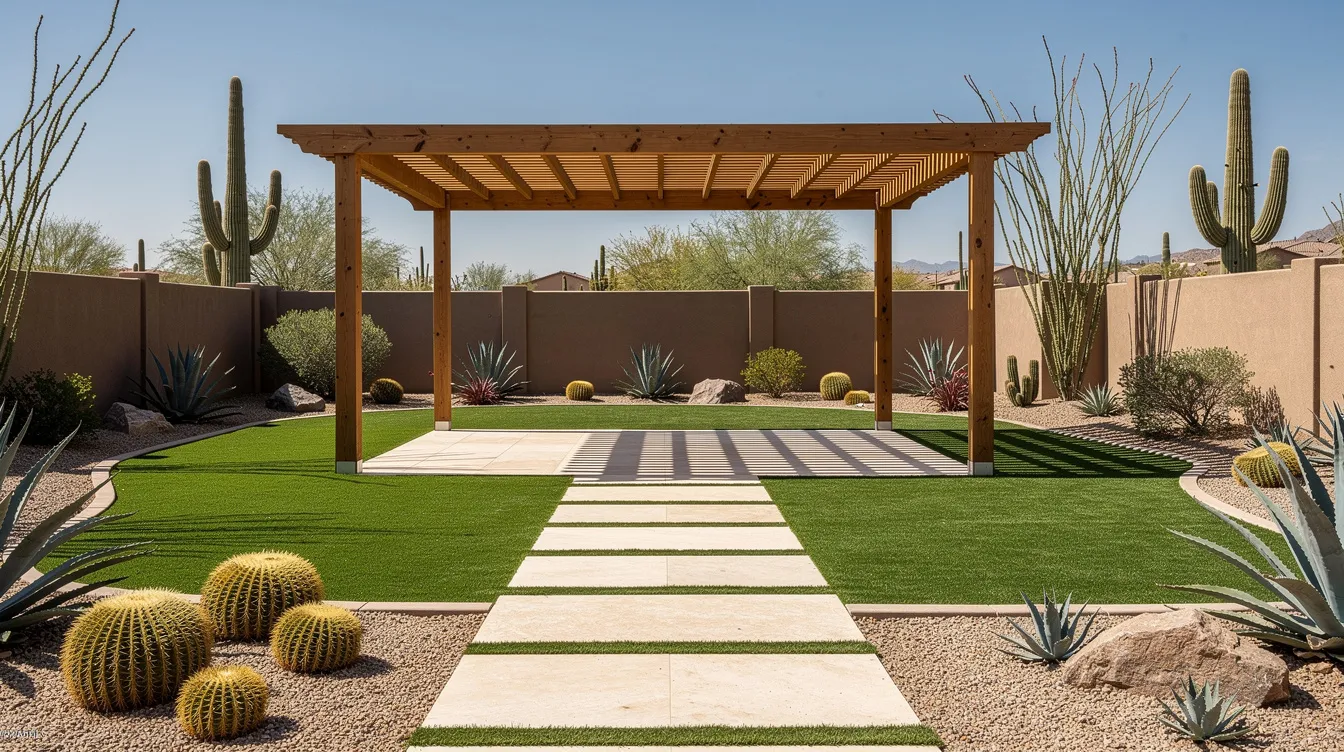
Maintenance: Low Maintenance, Not Zero Maintenance
Artificial grass requires less maintenance than natural grass – dramatically less – but it’s not zero maintenance. Treating it as “install and forget” is the fastest way to shorten your lawn’s life. Regular maintenance helps prevent premature aging of synthetic turf, and the effort involved is minimal compared to irrigating, mowing, and fertilizing a natural lawn.
Here’s what routine maintenance looks like:
-
Debris removal: Blow off leaves and organic matter regularly. Remove organic debris promptly to prevent mold growth underneath fibers.
-
Rinsing: Rinse turf areas regularly to remove dust and odors, especially after East Valley dust storms. A garden hose is all you need for most rinses.
-
Brushing: Routine brushing and cleaning are important for maintaining artificial turf. Regular brushing prevents matting and keeps fibers upright in high-traffic zones. A power broom works well for larger areas a few times per year.
-
Pet care: Pick up solid waste and pet waste immediately. For pet urine areas, periodic rinsing and enzyme cleaners control odors and protect backing.
-
Infill: Check infill levels regularly to maintain stability. Top off compacted areas every 1–2 years.
-
Deep cleaning: Professional deep cleaning is recommended every 1–2 years, especially for pet areas or heavily used zones.
Regular maintenance can double the lifespan of artificial grass. That’s not an exaggeration – the difference between a turf that lasts 8 years and one that lasts 15+ often comes down to whether anyone brushed the high-traffic lanes and kept the infill topped up. For ongoing ideas and tips, our Arizona landscape design blog and seasonal landscaping maintenance checklist for Queen Creek cover turf alongside the rest of your outdoor space.
Artificial Grass Lifespan by Use Case
How long does artificial turf last? It varies significantly depending on where and how your lawn sees use around the home.
Front yards focused on curb appeal and light foot traffic often last 18–25 years with minimal maintenance. These are the showcase installations – long artificial grass with a natural look, rarely walked on, and built for appearance. A well-maintained front yard synthetic lawn is one of the longest lasting turf investments you can make.
Family backyards with moderate play, entertaining, and occasional pets usually last around 12–20 years depending on turf choice and care. Artificial grass lasts 10 to 20 years with proper care in these settings.
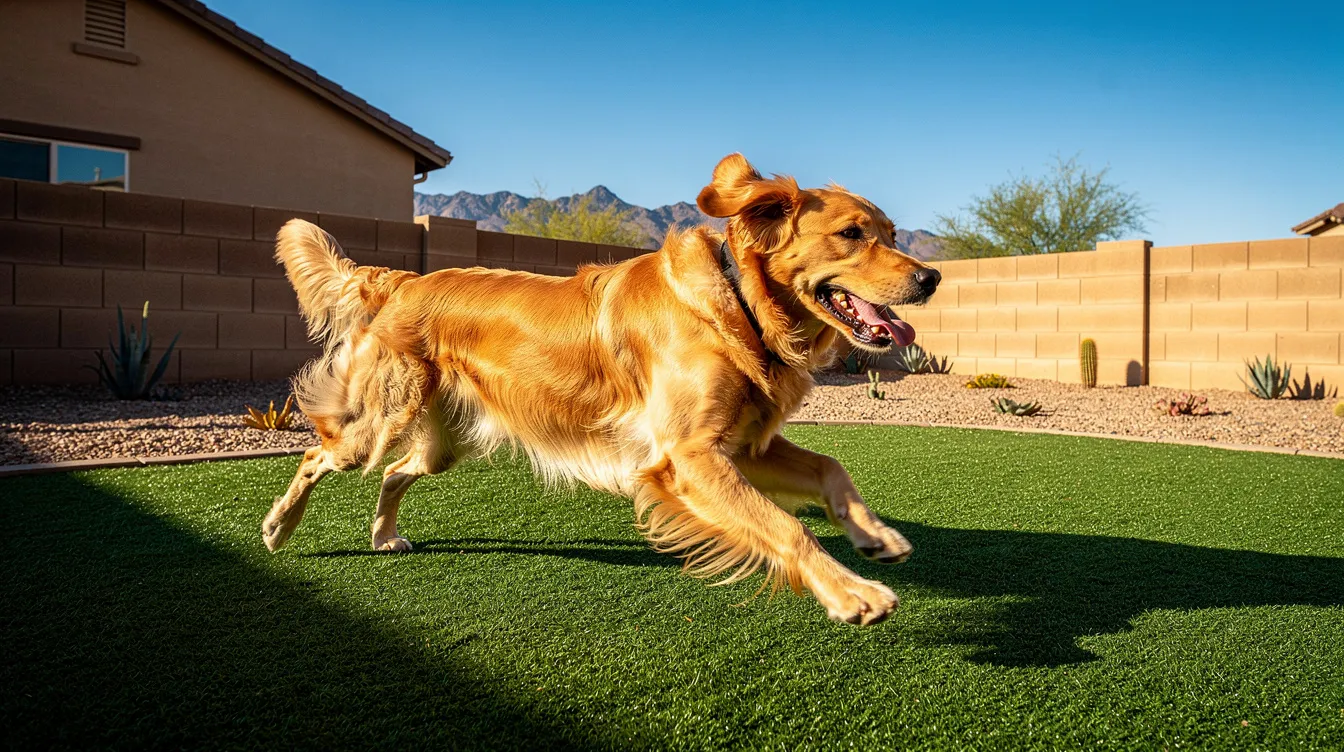
Dedicated dog runs and pet areas take the hardest hit. Artificial grass for dogs usually lasts about 8 to 12 years, shortened by repeated running, digging behavior, and urine exposure. A well-designed dog run with proper drainage and enzyme cleaning can push toward the higher end.
Play areas and sport zones – under swing sets, backyard soccer strips, putting greens – see concentrated wear that typically leads to 8–15 year lifespans. High-quality artificial turf can last up to 20 years in these settings if the product is sport-grade and maintained.
We recommend homeowners in Gilbert, Mesa, Chandler, Queen Creek, and San Tan Valley discuss each planned use during consultation so the right turf product and overall landscape design can be matched to each zone.
Is Artificial Grass Worth the Money in Arizona’s East Valley?
Artificial turf carries higher upfront installation costs than sod – typically $10–18 per square foot installed. But the value equation shifts quickly when you look at what you stop paying for.
Over the lifespan of a quality synthetic lawn, you eliminate:
-
Irrigation water for that area (thousands of gallons per year)
-
Weekly mowing service or equipment costs
-
Fertilizers, herbicides, and weed control
-
Periodic re-sodding or overseeding that natural lawns demand in this climate
Over 3–5 years, many East Valley homeowners recoup landscaping costs through reduced water and maintenance bills alone. Premium artificial grass that lasts 15–20+ years usually ends up cheaper over time than repeatedly repairing or replacing struggling natural lawns in the desert – making artificial grass worth the investment for most homeowners, especially when paired with luxury landscape design in Mesa, AZ that elevates the entire outdoor space.
Beyond the financial side, you get consistent curb appeal, a usable outdoor space during water restrictions, fewer muddy paws, and weekends back. For a detailed look at why synthetic turf makes sense here, check out why choose artificial turf in AZ and the 5 major benefits of installing artificial grass in Mesa, AZ.
Mesquite Landscaping offers free consultations and can include artificial turf as part of a broader outdoor living design – pavers, pergolas, outdoor kitchens, lighting – to maximize total value from a single project, and you can contact our landscape design team to explore options for your yard.
How Mesquite Landscaping Designs and Installs Long-Lasting Artificial Turf
Mesquite Landscaping, Inc. has spent over 20 years building landscapes across Arizona’s East Valley, and our design-build process for outdoor spaces is specifically tuned for long artificial grass lifespan in desert conditions.
It starts with a consultation and property walkthrough. A dedicated landscape designer evaluates your property’s sun exposure, drainage patterns, soil conditions, and how you plan to use each zone – in cities like Gilbert, Queen Creek, Mesa, Chandler, and San Tan Valley.
From there, we create 3D design visualizations that plan turf areas in relation to patios, pergolas, outdoor kitchens, pool decks, and planting beds as part of a comprehensive landscape design and build service. This isn’t just about aesthetics – it lets us anticipate traffic paths, shade coverage, and drainage before a single shovel hits the ground.
The installation process follows a sequence built for longevity: precision grading, compacted base layers, drainage planning, professional turf installation with secure seam work, and infill selected for your specific use case. We can tailor turf products for different parts of the same property – soft, lush fake grass in the front yard paired with tougher pet turf and pavers in a high-traffic backyard.
After installation, we provide warranty information and straightforward maintenance guidance so you get the full lifespan out of your new artificial lawn.
How to Make Artificial Turf Last Longer: Practical Tips for Arizona Homeowners
These habits won’t cost you much time, but they can realistically add several years to your turf’s functional life – pushing a 12-year lawn toward 18+ years.
-
Set a seasonal routine. Blow off debris, rinse dusty or pet-heavy areas, and brush high-traffic spots with a power broom a few times per year.
-
Add paver paths or stepping stones across areas where people frequently walk. This distributes wear and prevents constant foot traffic from wearing the same strip of synthetic turf.
-
Rotate portable equipment. Move play equipment, pet obstacles, or furniture occasionally so no single patch of fake grass takes all the abuse.
-
Fix small issues early. Repair lifted edges, top up infill levels where low, and adjust drainage if any pooling appears after monsoon storms. Small fixes prevent big failures.
-
Use mild soap and enzyme cleaners for spot cleaning pet areas rather than harsh chemicals that can break down turf fibers or backing.
-
Mind reflective surfaces. If windows or metal features direct concentrated sunlight onto your turf, add shade or hardscape buffers to prevent long lasting turf damage from focused heat.
When combined with quality materials and professional installation, these small habits protect your investment and keep your outdoor space looking natural for years beyond the warranty.
When to Replace Artificial Grass (And What Can Be Reused)
Even the best artificial turf eventually reaches end of life, usually in the 12–25 year window depending on conditions. Knowing when it’s time to replace artificial grass saves you from living with a lawn that looks tired or creates problems.
Signs it’s time to consider replacement:
-
Matted or flattened blades indicate artificial turf may need to be replaced – fibers that stay flat even after brushing
-
Severe fading and discoloration are signs that artificial turf needs replacement
-
Exposed backing visible through thinning turf fibers
-
Recurring odors or drainage problems despite cleaning
-
Seam separation, frayed edges, or trip hazards
The good news: in many cases, the compacted base layer can be reused or just refreshed, reducing replacement cost by 40–60% compared to a full rebuild. Old sections of fake turf can sometimes be repurposed for low-visibility areas like utility side yards or under storage sheds.
Mesquite Landscaping can assess your existing artificial turf, advise whether portions of the system – base, edging, some turf areas – are reusable, and design an updated landscape around the new installation, and you can talk directly with a landscape designer to plan that replacement.
FAQ: Artificial Turf Lifespan in Arizona
Does artificial turf last as long in Arizona as in cooler climates?
Arizona’s extreme UV and heat are tougher on synthetic materials than milder climates, so turf quality and UV stabilization matter more here. However, with premium UV-stable turf and a professional turf installer handling the base and drainage, Arizona homeowners can still expect 12–20+ years of life – comparable to or better than cooler regions using cheaper products. The environmental benefits of reduced water use also make artificial turf especially practical here.
Will artificial grass melt in Arizona heat?
Reputable artificial turf designed for outdoor use will not melt under normal Arizona sun and air temperatures, even on 110°F+ days. The risk comes from extreme point heat sources: reflective glass from low-E windows, hot metal surfaces, or fire pits placed directly on turf. Add pavers or hardscape buffers in those spots to protect your synthetic lawn. Rubber granules used as infill can also soften in extreme reflected heat, so infill selection matters.
How hot does fake turf get, and does that affect its lifespan?
Artificial turf surfaces can exceed air temperature by 30–40°F on peak summer afternoons, making them uncomfortable but not damaging to the turf itself. High quality turf is engineered to withstand these temperatures for many years. Shade structures, lighter-colored infill, or a quick rinse with a garden hose can bring surface temperatures down significantly for comfort without affecting the turf’s life.
Can I install artificial grass myself and still get a long lifespan?
DIY artificial grass installation is possible, but most struggles come from base compaction, drainage, and seam quality – the exact factors that determine how long does artificial grass last. Homeowners who want 15–20+ years of reliable use are usually better served by a professional installation from a team like Mesquite Landscaping, who can design the base and drainage correctly for Arizona soils and eliminate the poor installation issues that cause early failure.
Will my artificial lawn flatten permanently in high traffic areas?
Some flattening is normal where there is heavy foot traffic, pets, or play equipment. Quality turf fibers are designed to rebound when brushed, and regular brushing or periodic professional power brooming in high-traffic zones will greatly delay permanent matting. If your lawn sees constant running or concentrated activity, matching the right product to that zone from the start is the best insurance for keeping the grass blades standing tall for years.
