
Key Takeaways
-
Smart landscape design can cut outdoor water use by up to 50% in Phoenix-area yards while boosting curb appeal and property value. A well-designed landscape enhances property value and enjoyment for years.
-
A clear landscape plan is essential before touching your front yard or backyard, especially in hot, dry cities like Queen Creek, San Tan Valley, Gilbert, and Mesa where every gallon counts.
-
Low maintenance, climate-appropriate design features like shade trees, decomposed granite, drip irrigation, and native plants are the foundation of a functional landscape in Arizona’s extreme heat.
-
Homeowners can DIY parts of the design process using tools like graph paper or SketchUp, but may want a professional landscape designer or landscape architect for grading, drainage issues, and complex outdoor kitchens or pool areas.
-
Digital Vibes Agency helps landscape designers and contractors in the Phoenix East Valley market these projects online through SEO, PPC, and web design to generate more qualified leads and higher ROI.
Introduction to Landscape Design in Arizona Outdoor Spaces
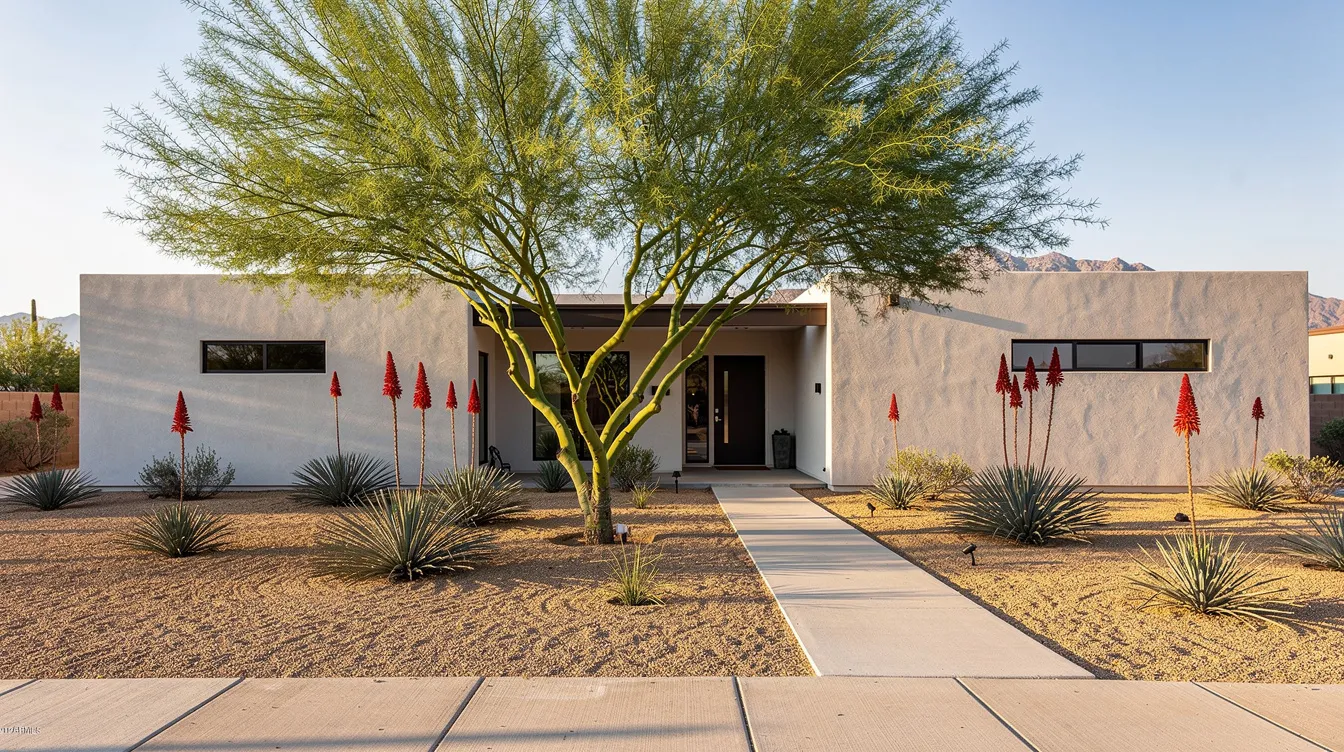
Picture a typical 2026 suburban front yard in Gilbert. Where a yellowing patch of bermuda grass once baked in the sun, a shady Desert Museum palo verde now anchors a clean bed of decomposed granite, flanked by clusters of red yucca and a smooth concrete walkway leading to the front door. The water bill dropped by half. The curb appeal doubled. And the homeowner hasn’t touched a mower in two years.
That transformation didn’t happen by accident. It started with landscape design-the intentional planning of outdoor space across a front yard, backyard, and side yards to balance beauty, function, budget, and environmental impact.
In the Phoenix metro area, design challenges are real. Summers routinely exceed 110°F. Water restrictions are tightening. Soils are often alkaline, compacted, or laced with caliche layers that block roots and drainage. Urban heat island effects mean block walls and asphalt radiate heat long after sunset.
A landscape plan prevents the costly mistakes that come from winging it: overcrowded plants that die within a year, irrigation that waters concrete instead of roots, and expensive rework when the layout doesn’t match how your family actually uses the yard.
This article focuses on practical design solutions for homeowners and small businesses in Queen Creek, San Tan Valley, Gilbert, and Mesa, with examples anchored in 2024–2026 conditions.
Objectives of a Modern Landscape Design
Before choosing a single plant or paver, define what you want your yard to accomplish. Think of this as a checklist for planning goals:
-
Create usable outdoor space. Seating areas, play zones, dining patios, and garden rooms that serve as outdoor dining or entertainment spaces-each should have a purpose.
-
Improve curb appeal. A clean, well-planned front yard photographs better for MLS listings and catches attention from the street. Professional photos and drone shots of finished yards perform well in local SEO and PPC campaigns for landscape designers.
-
Reduce water and maintenance costs. Landscapes can reduce energy costs by providing shade. Deciduous trees can save up to 25% on energy costs by shading walls in summer and letting light through in winter.
-
Support local ecosystems. Native plant gardens support local ecosystems and require less water, attracting pollinators while reducing chemical inputs and runoff.
Here are examples of specific goals tailored to East Valley homes:
-
Shade the west-facing wall of a Mesa house to lower cooling bills
-
Add a small, low maintenance courtyard for a Gilbert home office
-
Create a dog-friendly side yard in San Tan Valley with gravel and a mown grass strip
In the Phoenix area, thoughtful landscape architecture can recoup a significant portion of cost at resale. Homeowners typically spend about 10% of their home’s value on landscaping, and that investment shows in both lifestyle quality and listing price.
Core Design Principles for Outdoor Space
Good landscape design isn’t about following rigid rules. It’s about applying a few basic principles that keep your yard looking intentional rather than random. Here’s what matters:
-
Proportion and scale. Proportion and scale refer to the size relationship between landscape features and their surroundings. Scale refers to the proportion between dimensions in design. A 50-foot saguaro next to a one-story Gilbert home would dwarf the house. A 20-to-25-foot desert willow or palo verde matches the architecture and provides usable shade without overwhelming the space.
-
Balance. Balance can be symmetrical or asymmetrical in landscape design. A symmetrical front yard with matching planters flanking the entry reads as formal. An asymmetrical arrangement-a single specimen tree offset by a low grouping of agaves-feels more natural and contemporary.
-
Unity. Unity is achieved when different design parts appear as a single unit. Repeating the same hardscape materials-concrete pavers in the front yard, the same concrete tone on the back patio, rusted steel edging throughout-ties the property together visually.
-
Rhythm. Rhythm in design is created through the repetition of elements. Spacing three identical Texas sage shrubs along a walkway creates a visual beat that pulls the eye forward.
-
Line. Line is used to guide the viewer’s eye and direct movement. Curving decomposed granite paths create softer movement through a yard. Straight concrete walkways lead the eye directly from driveway to entry.
-
Sequence. Sequence directs the eye in a natural flow, creating a story in the landscape-from entry gate, past a specimen tree, to a seating area at the far end of the yard.
-
Focalization. Focalization establishes a feature that attracts the eye first, organizing the design. This could be a specimen cactus, a modern water feature, a sculptural desert tree, or a fire pit that anchors the backyard layout.
-
Accent elements. Accent elements stand out in a landscape design for emphasis-a brightly colored pot, a single golden barrel cactus in a sea of gravel, or a piece of rusted steel art against a stucco wall.
-
Simplicity. Simplicity encourages avoiding clutter to create a tidy space. Fewer plant species, clear sightlines, and uncluttered layouts are easier to care for, especially in busy East Valley households.
Understanding and Analyzing Your Site
Before you sketch a single line, spend a weekend studying your property. Site analysis identifies environmental factors affecting design, and skipping it is the fastest way to waste money.
Map sun and shade. Understanding sun exposure helps in plant placement decisions. On a typical Queen Creek lot, the west wall gets hammered by full sun after midday, and reflected heat from block walls raises temperatures even further. Walk your yard at 8 a.m., noon, and 4 p.m. in June and note where shade falls from the house, fences, and any existing tree canopies. Mark areas of full sun versus partial shade.
Observe drainage. After a monsoon storm in Mesa, walk outside and note where water pools, how it leaves the property, and where erosion is happening. These observations tell you exactly where to place swales or dry creek beds in your design. Drainage issues left unaddressed can kill plants and undermine hardscape.
Test soil conditions. Common soil conditions in Gilbert and San Tan Valley include compacted clay loam and caliche layers that impede root growth and water infiltration. Sandy loam in newer developments drains quickly but may stress plants. Knowing your soil type before selecting plants saves replacement costs later.
Evaluate privacy and views. Look for neighboring two-story homes, busy roads, and sight lines to mountains like the Superstitions. Screening trees (ironwood, palo verde) or textured walls can block unwanted views. Strategic openings can frame amazing mountain vistas.
Create a base map. A base plan should include property lines and existing features-house footprint, AC units, utilities, slopes, and compass orientation. Conducting a site survey is critical for a functional landscape, and even a hand-drawn map with a measuring tape and rough measurements will work as a starting point. Use a base plan drawn to scale for landscape design.
From Idea to Landscape Plan: The Design Process
A clear, step-by-step design process avoids costly mistakes and is standard in professional landscape architecture. Here’s how to move from vision to a buildable plan:
1. List activities and needs. Write down everything your family wants: play areas for kids, space for pets, entertaining, a vegetable garden, quiet seating. Include traffic patterns-how people move from the back door to the grill, from the gate to the pool.
2. Divide the yard into zones. Sketch bubble diagrams separating the public front yard, private backyard, and service areas (trash, storage, dog run). Each bubble represents a use, not a specific shape yet.
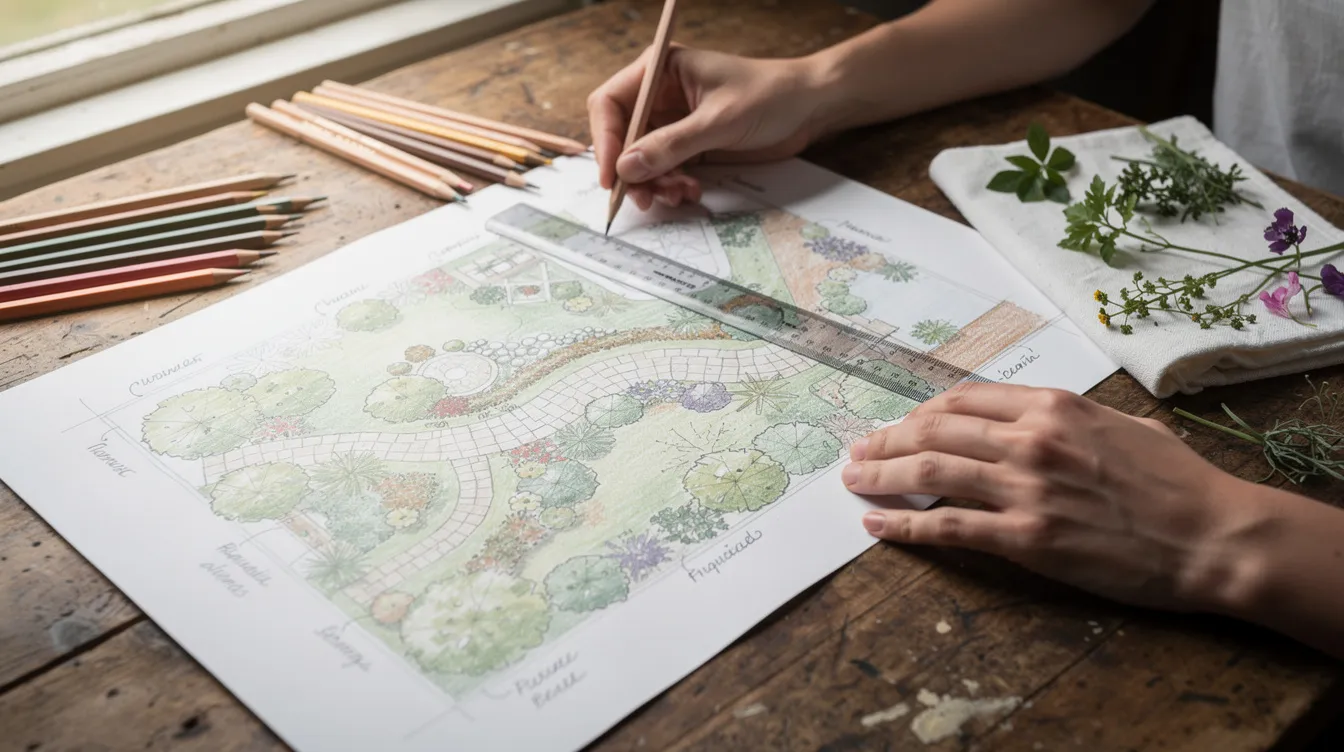
3. Convert bubbles into a scaled plan. A landscape plan is a scaled diagram of outdoor space arrangement showing patios, walkways, planting beds, lawn or artificial turf areas, and tree placement. Draw it from a bird’s eye view so you can see the entire property at once.
4. Use the right tools. SketchUp is a popular tool for DIY landscape design and works well for 3D visualization. Canva offers free landscape design templates for mood boards and concept presentations. But even a pencil drawing on graph paper is sufficient to communicate a design to a contractor. You can also layer ideas using tracing paper over your base map to test different arrangements without starting over each time.
5. Create multiple options. Try two or three layout versions for the same lot-one with minimal turf, one with no turf, one with a moderate play lawn. Compare shade coverage, circulation, cost, and flexibility. A rough sketch of each option helps you see trade-offs before committing.
6. Hand off to a professional if needed. Landscape designers can supply detailed construction drawings with grading, retaining walls, drainage, and lighting layouts. But having a homeowner concept plan speeds up estimates and bidding, saving you money on design fees.
Design by Space: Front Yard, Backyard, and Side Yards
Different yard areas serve different purposes in Phoenix-area homes. Here’s how to approach each one:
Front Yard
Curb appeal and HOA guidelines drive front yard decisions. In Gilbert, many phoenix homeowners have removed high-water turf and replaced it with crushed granite, native shrubs, and a single shade tree. The path from driveway to front door should be clear, smooth, and well lit. Paths should be at least 4.5 feet wide for two people to walk side by side comfortably.
Backyard
This is where outdoor living happens. San Tan Valley lots often allow larger covered patios, grill islands close to the indoor kitchen, and a small play lawn rather than wall-to-wall grass. Garden rooms can serve as outdoor dining or entertainment spaces, separated by planters or low walls. The backyard is where you build your dream backyard-the space that matches your lifestyle.
Side Yards
Narrow and often neglected, side yards in Mesa subdivisions work well as dog runs, storage corridors, or shade gardens. Gravel paths with stepping stones and screened areas for trash bins keep things functional without wasting a square foot. Even in limited space, a few drought-tolerant groundcovers and a stepping-stone path turn a forgotten strip into a usable outdoor area.
Accessibility and safety matter throughout: smooth paths for strollers or wheelchairs, step lighting on grade changes, and non-slip surfaces near pools and spas.
Popular Landscape Design Styles in the Phoenix East Valley
Landscape design styles serve as visual blueprints for transforming outdoor areas. Matching your yard to a specific theme can enhance its beauty and function. Here are the most popular design styles in Queen Creek, San Tan Valley, Gilbert, and Mesa:
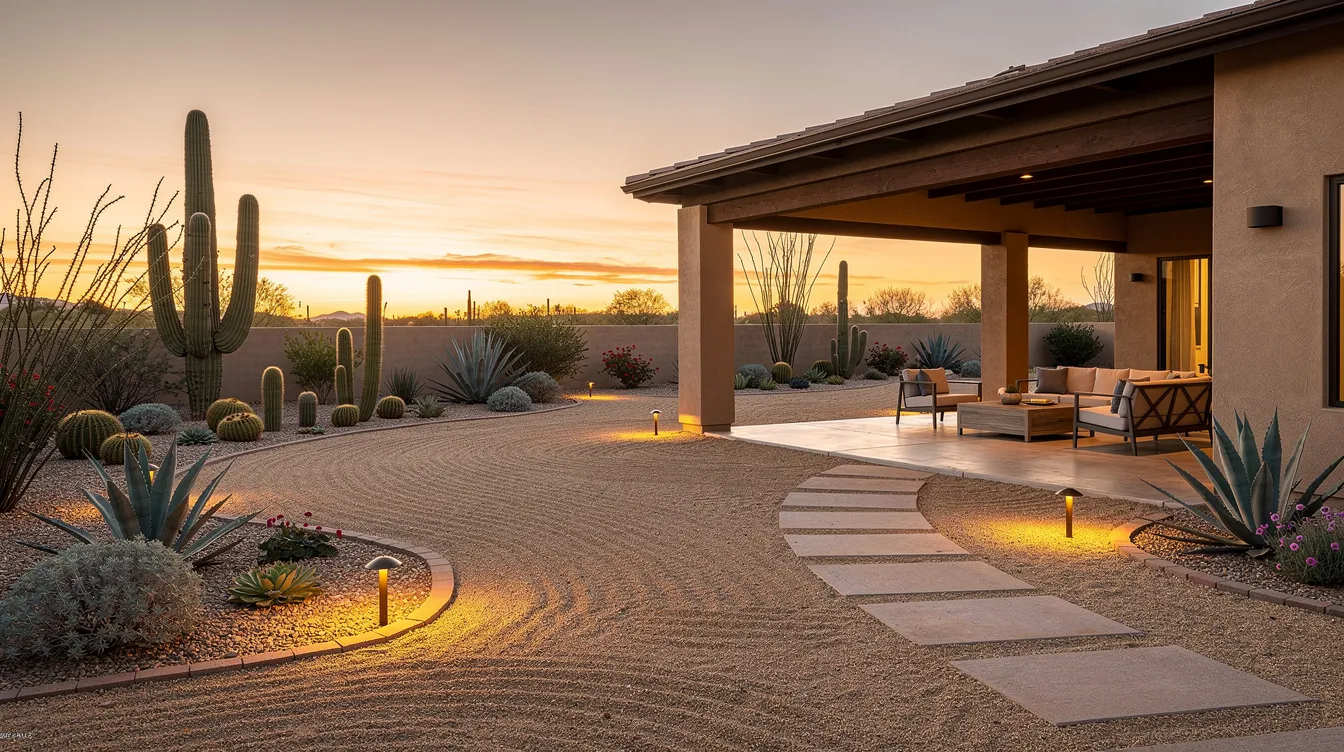
Contemporary Desert. Modern landscape design focuses on minimalist principles and architectural materials. Think clean lines, concrete or porcelain pavers, rusted steel planters, and architectural agaves paired with blue palo verde trees. Desert landscapes use drought-tolerant plants like agave as sculptural focal points. This style dominates newer East Valley communities.
Mediterranean-Influenced. Stucco walls, terracotta pots, olives or desert-adapted citrus, and gravel with warm-toned stone. Traditional landscape design is characterized by soft curves and warm materials, and this style adapts those ideas for Arizona’s heat. Found in Gilbert and Queen Creek communities built after 2018.
Modern Farmyard / Ranch. Popular in San Tan Valley where lots are larger: decomposed granite drives, shade structures with metal roofs, native grasses like muhly grass, and simple plant palettes. Informal and low-fuss.
Resort-Inspired. More irrigation, palms, flowering shrubs, and lush poolscapes. Better suited to larger Mesa lots with higher water budgets. This style draws from naturalistic design that replicates wild landscapes or lush cottage gardens with rich plantings, adapted for the desert context.
Other style references worth knowing: Formal landscape design features strict symmetry, geometric shapes, and clean lines-useful for entry courtyards. Formal gardens often feature symmetrical layouts and structured plantings. Cottage gardens feature a wild, informal planting style that can work in shaded microclimates. Zen gardens emphasize simplicity and tranquility in design, translating well to minimalist desert courtyards.
Align your style with your home’s architecture, HOA rules, and your appetite for maintenance and water use. The best style is the one you’ll actually maintain.
Key Design Features and Enhancements
Here are specific, concrete design features commonly requested in 2024–2026 Phoenix-area projects:
Hardscape. Patios, walkways, driveways, and seat walls using pavers, colored concrete, brick accents, or natural stone. Lighter colors reflect heat and stay cooler underfoot. Using low-impact materials reduces environmental harm in landscaping-permeable pavers, for example, allow stormwater to infiltrate rather than run off.
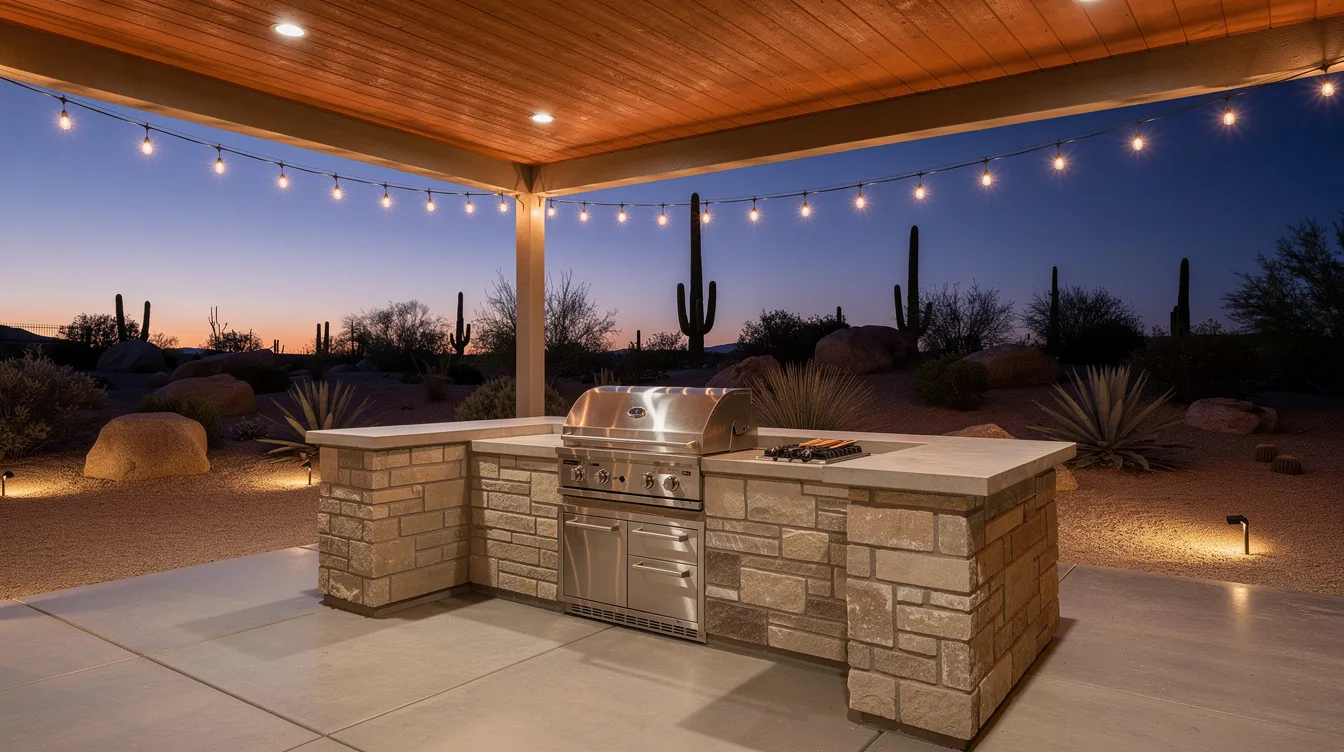
Outdoor kitchens. Islands with built-in gas grills, side burners, mini-fridges, and storage. Place them near the indoor kitchen for efficiency and consider prevailing winds to deflect smoke away from seating. Outdoor kitchens are among the most requested features in East Valley backyard remodels.
Water features. Low-water recirculating fountains or modern scuppers add sound and movement without significant water loss. These landscape elements create focal points and mask road noise in neighborhoods near busy streets.
Fire features. Gas fire pits, fire bowls, or linear fireplaces see heavy use from October through March in Gilbert and Mesa. Position them with adequate safety setbacks from structures and flammable materials.
Lighting. LED path lights integrated into hardscape, downlights from pergolas or trees, and smart-controlled systems improve safety and ambiance while saving energy. Proper lighting extends the hours you can enjoy your outdoor living experience well past sunset.
Functional details. Raised planters for herbs or a small vegetable garden, integrated seating in walls, shade sails, and storage benches keep the yard tidy and low maintenance. These other elements often make the difference between a yard you look at and one you actually use.
Plant Selection for a Low-Maintenance Arizona Landscape
Plant selection is the main driver of water use, maintenance, and long-term success in desert outdoor spaces. Plant selection should consider mature size and environmental needs-a tree that grows 40 feet wide doesn’t belong in a 15-foot side yard.
Recommended Trees
-
Desert Museum palo verde – fast-growing, thornless, brilliant yellow spring blooms, 20–30 foot canopy
-
Desert willow – deciduous, hummingbird magnet, 20–25 feet, tolerates caliche
-
Native live oak – evergreen shade, slower growing, excellent for long-term canopy
These work well across Queen Creek, San Tan Valley, Gilbert, and Mesa. Deciduous trees can save up to 25% on energy costs when planted to shade west and south walls.
Shrubs and Accents
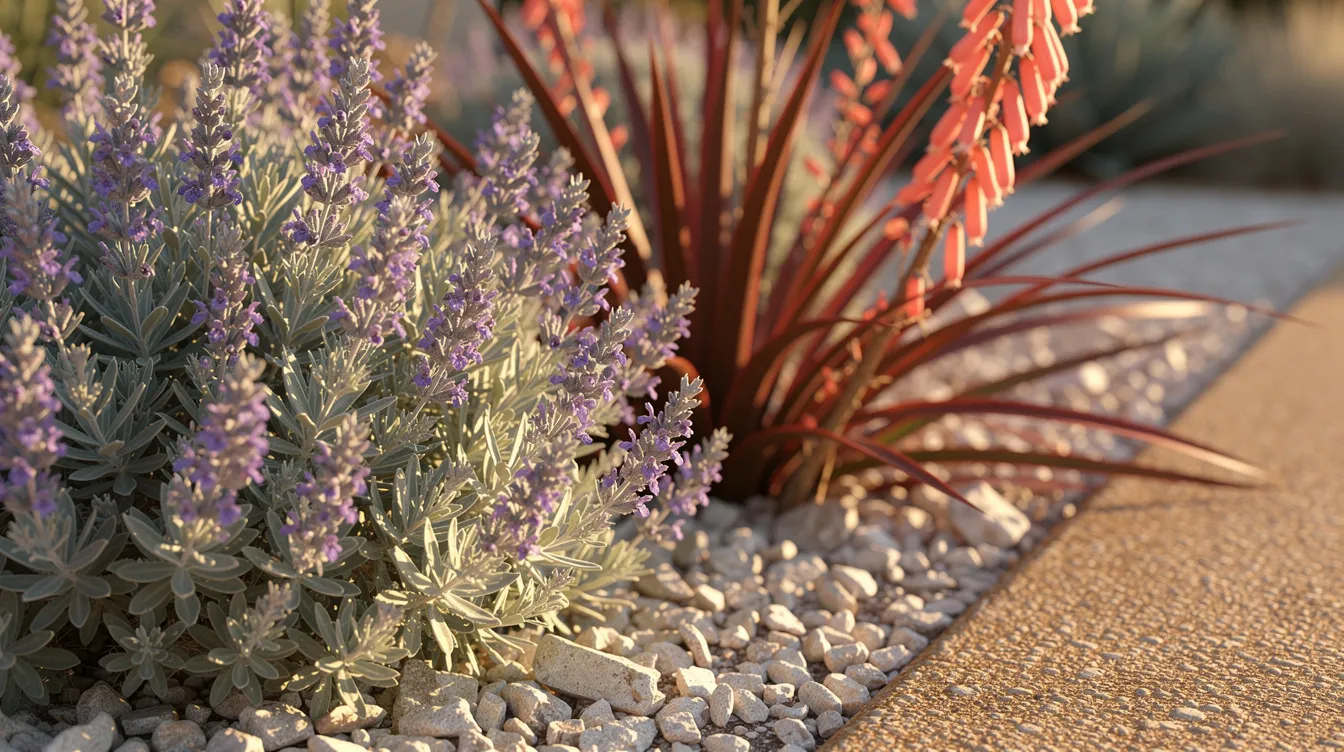
Texas sage, lantana, valentine bush, agave, yucca, and red yucca provide seasonal color with minimal care. These native plants support local ecosystems and require less water than non-native alternatives, making them ideal for creating outdoor spaces that work with Arizona’s climate rather than against it.
Turf Decisions
Evaluate small artificial turf play areas versus reduced real lawn with high-efficiency irrigation. Artificial turf eliminates watering entirely but can increase surface heat unless cooling infill is used. Real turf works for play zones but demands consistent irrigation, mowing, and fertilizing.
Hydrozoning
Group plants by water needs. Keep high-water plants close to the house or your own landscape’s outdoor living areas. Place drought-tolerant species further out. This approach simplifies irrigation and cuts waste.
Water-Wise and Low-Maintenance Design Solutions
Cutting maintenance and water bills doesn’t mean sacrificing aesthetics. Here are practical approaches used in professional East Valley installations:
Drip irrigation done right. A well-designed drip system with pressure regulators, filters, and proper emitter spacing delivers water directly to roots. Smart controllers adjust schedules based on weather, eliminating the guesswork. Water conservation techniques can mitigate stormwater runoff when paired with proper grading.
Replace grass strategically. Swap large turf areas for decorative gravel, decomposed granite, or permeable pavers. Keep strategic shade trees and accent plants to soften the look. Studies show switching from turf-dominated yards to desert-adapted landscaping reduces outdoor water use by 50–70%.
Harvest rainwater. A 1,000 square foot roof produces 630 gallons of runoff in a 1-inch rainstorm. During monsoon seasons, directing roof runoff into tree basins or dry creek beds provides free deep watering for established trees.
Maintenance-saving details. Use pre-emergent herbicides in fall and spring to control weeds. Skip landscape fabric under rock beds-it degrades and creates more problems than it solves. Install wider mowing strips along the edge of property boundaries to reduce trimming.
Seasonal tune-ups over constant fussing. Schedule irrigation checks before summer, prune once or twice a year, and top up gravel as needed. This approach frees up weekends for actually enjoying the yard rather than working in it.
Working with Landscape Designers and Contractors
Understanding who does what saves confusion:
-
Landscape architects hold professional licenses and handle complex site engineering, grading, and permitting.
-
Landscape designers focus on planting plans, material selection, and aesthetic layout.
-
Licensed contractors build what the plans specify. Hiring a licensed landscape contractor is often necessary for complex projects involving walls, gas lines, electrical, or pools.
When to Call a Professional
You need expert help for grading changes, retaining walls, pools, gas lines for outdoor kitchens, and complex lighting systems. For a simple front yard planting refresh, DIY may be fine.
What to Prepare Before Contacting a Pro
-
Base map with property lines, house footprint, and utilities
-
Photos of the existing yard from multiple angles
-
Inspiration images showing your vision
-
A prioritized wish list and approximate budget range
Costs in 2026
Professional landscape design costs range from $2,000 to $8,000 for single-family homes in the East Valley. Design-only fees run $75 to $90 per hour in the Phoenix metro. Landscape design costs vary based on project size and scope-a simple front yard concept plan costs far less than a full-property master plan with construction drawings.
Timeline
A mid-sized Gilbert or Mesa project in 2026 typically follows this sequence: initial consult (week 1), concept plan (weeks 2–3), revisions (week 4), final landscape plan and permitting if needed (weeks 5–6), and construction and installation over several additional weeks.
Check ROC licensing, insurance, and local reviews. Visit at least one completed project in Queen Creek or San Tan Valley before signing a contract.
Marketing Your Landscape Design Business with Digital Vibes Agency
This section is for professional landscape designers and contractors in the Phoenix East Valley who want more qualified leads.
Local SEO helps your business rank for searches like “landscape designer Gilbert AZ” or “low maintenance front yard design Queen Creek.” This means optimizing your Google Business Profile, building location-specific service pages, and earning reviews from local clients. Digital Vibes Agency specializes in SEO services across the Phoenix metro with a focus on measurable results for service businesses.
PPC campaigns on Google Ads and Meta target high-intent keywords like “outdoor kitchen contractor Mesa” or “backyard remodel San Tan Valley,” putting your business in front of homeowners actively searching for your services.
Web design and development matters more than most contractors realize. A fast, mobile-optimized site with strong before-and-after galleries, clear service pages, and easy quote-request forms converts browsers into calls. Digital Vibes Agency, based in Chandler, builds exactly these kinds of sites for landscaping and home-service businesses.
Content marketing ideas that generate organic traffic: blog posts on landscape plan costs in 2026, water-wise plant lists for Gilbert and Mesa, and case studies of completed East Valley projects with high-quality photography.
If you’re a landscape designer or contractor in Queen Creek, San Tan Valley, Gilbert, or Mesa looking to grow your community reach and generate leads, request a free marketing estimate from Digital Vibes Agency.
Installing and Maintaining Your New Landscape
A good design only succeeds when installation and maintenance follow the plan carefully.
Phase Your Project
Start with grading, irrigation, and main hardscape in year one. Add planting, lighting, and outdoor kitchens in later stages as budget allows. This approach spreads cost and lets you live with the site before committing to final details.
Realistic Timelines for 2026
|
Project Type |
Location Example |
Typical Duration |
|---|---|---|
|
Front yard refresh (gravel, plants, path) |
Gilbert |
1–2 weeks |
|
Full backyard remodel with pool and kitchen |
Mesa |
6–8 weeks |
|
Mid-size patio + planting + irrigation |
Queen Creek |
3–4 weeks |
Maintenance Routines for Low-Maintenance Yards
-
Seasonal pruning (late winter and after monsoon)
-
Drip system checks and emitter cleaning before summer
-
Top up gravel and decomposed granite annually
-
Adjust smart irrigation controllers for seasonal changes
-
Inspect hardscape for settling or cracks every spring
Keep copies of the final landscape plan, plant list, and irrigation layout. These documents are essential for troubleshooting problems, planning future upgrades, and providing a strong foundation for any contractor who works on your property later.
FAQ
How much does professional landscape design cost in the Phoenix East Valley in 2026?
Professional landscape design costs range from $2,000 to $8,000 for design-only services on single-family homes in Queen Creek, San Tan Valley, Gilbert, and Mesa. A simple front yard concept may cost a few hundred to $1,500, while a full-property master plan with construction drawings, lighting layouts, and irrigation plans runs higher. Complete design-build projects that include installation vary widely based on size and features like pools, outdoor kitchens, and extensive hardscape. Always request itemized quotes that separate design fees, materials, labor, and optional upgrades so you can compare contractors fairly.
Can I design my own landscape, or do I really need a landscape designer?
Many homeowners successfully handle smaller projects-planting beds, minor hardscape, rearranging an outdoor area-using basic principles and free or low-cost software like SketchUp or Canva templates. The hybrid approach works well: you create a concept plan with your ideas, priorities, and rough layout, then a professional refines it into a detailed, buildable landscape plan. Hiring a landscape designer or landscape architect is strongly recommended when dealing with complex grading, drainage issues, pools, retaining walls, or large outdoor kitchens that require permitting and licensed construction.
What are the best low-maintenance plants for a front yard in Gilbert or Mesa?
Reliable performers include Desert Museum palo verde (shade tree, thornless), desert willow (deciduous, low water), Texas sage (purple blooms after rain), red yucca (coral flowers, virtually zero care), lantana (trailing color), and agave (sculptural, extremely drought-tolerant). Native plant gardens support local ecosystems and require less water than exotic alternatives. Plant choices should still match each home’s exact sun exposure, soil type, and HOA rules, so visiting a local nursery or consulting a designer for site-specific plant palettes is a smart step before buying.
How long will a new landscape last before it needs a major refresh?
Hardscape elements-patios, walls, properly installed irrigation lines-can last 15 to 25 years or more with minor repairs, provided the original construction used proper base preparation and quality materials. Plants evolve over 5 to 15 years as trees mature, shrubs fill in, and some specimens reach the end of their natural lifespan. Many East Valley homeowners do light updates every 3 to 5 years-adding lighting, replacing a few plants, refreshing gravel-and larger overhauls when trees mature or lifestyle needs change. Regular maintenance and irrigation checks extend the life of both hardscape and plantings significantly.
How can a landscape designer or contractor in the East Valley get more local leads?
A modern lead-generation strategy combines local SEO (ranking for searches like “landscape designer near me”), targeted Google Ads on high-intent keywords, active social media showing recent projects, and a conversion-focused website with clear service pages and easy contact forms. High-quality project photos, client testimonials, and before-and-after galleries convert site visitors into inquiries. Digital Vibes Agency helps landscaping businesses in Queen Creek, San Tan Valley, Gilbert, and Mesa set up tracking, refine ad campaigns, and build websites that turn clicks into customers.
