
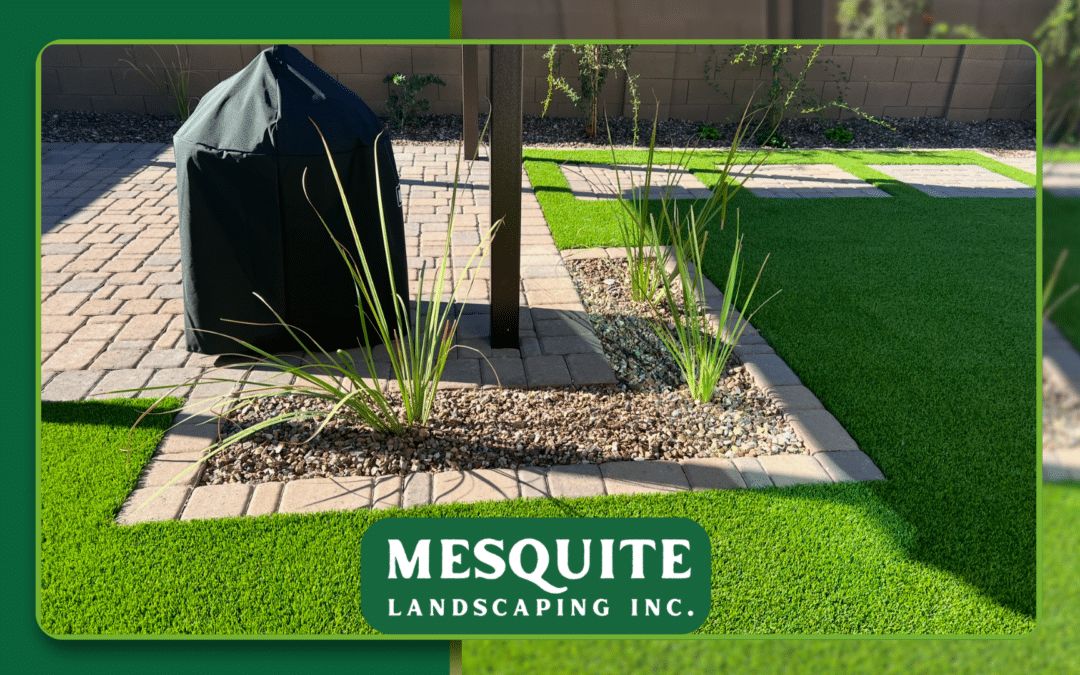
Arizona’s East Valley is one of the most rewarding places to live outdoors-and one of the most demanding places to design for. Between triple-digit summers, alkaline soils, and HOA rules that can fill a binder, building the yard you actually want to use takes more than a weekend trip to the nursery. It takes a plan. This guide walks you through everything that goes into professional landscape design services, from the first consultation to the moment you sit down in your finished outdoor space with a cold drink in hand.
Key Takeaways
-
Mesquite Landscaping, Inc. is a full-service design-build landscape contractor in Arizona’s East Valley, handling every stage from concept and 3D design through construction and final walkthrough.
-
Homeowners can preview their dream yard with photorealistic 3D landscape design renderings and video walkthroughs before committing to installation, which helps avoid expensive re-dos and reduces costly mistakes.
-
Specific outdoor living features include hardscaping (pavers, patios, walls), artificial turf, outdoor kitchens, fire pits, pergolas, landscape lighting, smart irrigation, and water features-all tailored to desert conditions.
-
Water-wise, low-maintenance garden design is central to every project: native and desert-adapted plants, drip irrigation with smart controllers, mulching, and decomposed granite ground cover keep yards beautiful without wasting water.
-
Ready to see what your property could look like? Request a free on-site consultation and 3D design proposal from Mesquite Landscaping, Inc. to begin your project with confidence.
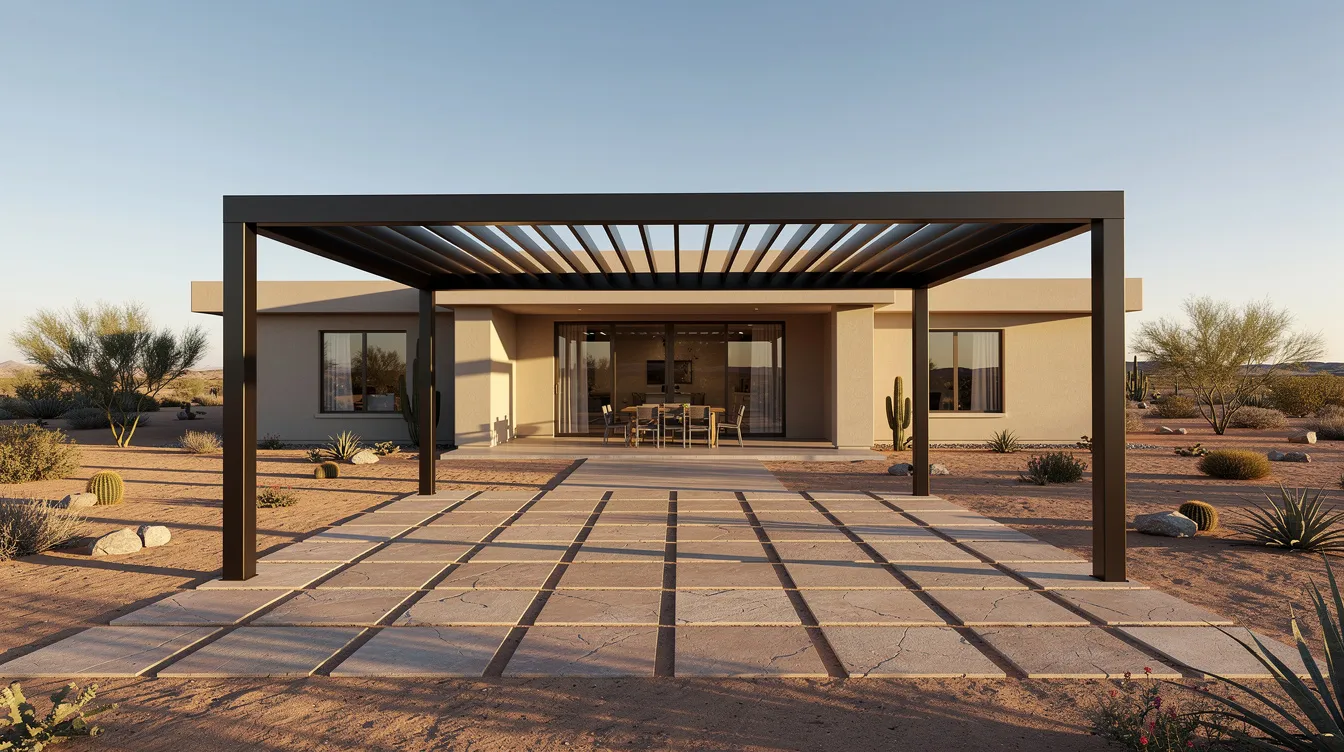
Why Professional Landscape Design Services Matter in Arizona
Arizona’s low desert receives only about 4 to 12 inches of rainfall per year while annual evaporation rates reach 70 to 80 inches, according to the University of Arizona Cooperative Extension. Add compacted caliche soils and brutal west-facing sun exposure, and you have a climate that punishes guesswork. Professional landscape design exists to solve exactly these challenges.
A well-executed design plan protects the investment in your home. Homes with cohesive outdoor living spaces consistently sell faster and at higher prices than comparable homes with neglected or disjointed yards. Professional landscape design can boost property value through enhanced curb appeal, and custom landscape design increases property value and usable space over time. Beyond resale, a thoughtful plan delivers daily comfort-shade where you need it, drainage that works, and plants that thrive instead of struggle.
Consider the contrast between “winging it” and working from a master plan:
-
Without a plan, you might plant a decorative tree exactly where drainage should flow, build a patio that collects standing water, or install a pergola that blocks zero afternoon sun. Weekend impulse buys pile up without cohesion.
-
With a master plan, every element-hardscape, planting palette, shade structures, lighting, irrigation-is coordinated from day one. A cohesive design reduces clutter and enhances the transition between outdoor zones, so the yard feels intentional rather than assembled.
Safety and function matter just as much as style. Proper drainage and grading prevent soil erosion and standing water. Slip-resistant materials around pools, correctly designed steps, and well-lit pathways reduce hazards. Professional landscape design can address drainage issues and improve property usability on even the trickiest lots.
Mesquite Landscaping, Inc. works specifically in the East Valley-Gilbert, Queen Creek, Mesa, Chandler, San Tan Valley, and Gold Canyon, providing expert landscaping and outdoor design in the Southeast Valley. The team understands local HOA rules, city codes, and the typical lot layouts built between about 1995 and 2024. Successful landscape design planning considers environmental regulations and HOA guidelines from the start, not as an afterthought.
What Is Landscape Design? (And How It Differs From Landscaping Services)
Landscape design is the planning and conceptual phase of any outdoor project. It’s where you organize plants, hardscapes, structures, circulation, lighting, and water into one cohesive vision before anyone picks up a shovel. Landscape design services include site assessment and concept designing for outdoor spaces, giving homeowners a clear blueprint.
Here’s the simplest way to separate the two:
|
|
Landscape Design |
Landscaping Services |
|---|---|---|
|
Focus |
Concepts, plans, 3D visuals, material and plant selection |
Grading, installation, planting, irrigation, construction, maintenance |
|
Output |
Drawings, renderings, specifications |
A finished yard |
|
When |
Before construction begins |
During and after construction |
Core landscape design components include consultation, master planning, hardscaping, and softscaping-all working together in a single plan.
Who does what?
-
Landscape architects are licensed professionals. A licensed landscape architect has a degree and state certification, and they typically handle larger, more complex, or commercial projects requiring graded permits, drainage engineering, and code-compliant construction documents.
-
Landscape designers focus on visual composition, plant palettes, and layout. They may have horticultural or design training but aren’t always licensed.
-
Design-build contractors like Mesquite Landscaping, Inc. combine both roles: the company handles design, visualization, and full construction under one contract.
For typical East Valley residential projects-front yards, backyards, outdoor kitchens, fire pits, pergolas-a design-build landscape contractor often provides the most efficient approach. One team from concept to completion means no miscommunication between a separate designer and installer. Hiring landscape designers involves understanding their services and design processes, and a design-build firm simplifies that conversation.
Our Landscape Design Process: From First Call to Finished Yard
Landscape design is a phased process transforming outdoor areas into functional environments, especially when you’re working with custom landscape design and install experts in Gilbert. Here’s exactly how it works when you partner with Mesquite Landscaping, Inc.
Initial Consultation
Everything starts with a discovery conversation-by phone, online form, or in person. The team will discuss your goals (entertaining, play areas, low water use, privacy), your budget range, your timeline, and any inspiration photos you’ve collected. This is also where HOA constraints and city zoning requirements surface early, so nothing gets designed that can’t get approved.
On-Site Visit
A team member visits your property to measure the space, check sun patterns (that brutal west sun is the first thing they note), and identify views worth framing or screening. Existing features-pools, builder-installed patios, mature trees-are documented. Soil conditions and grade are evaluated because proper drainage and grading prevent soil erosion and standing water before they become problems.
Concept Development
Professional designs incorporate client preferences and site conditions. The design team creates functional zones-dining near the kitchen door, a lounge around a fire pit, a play area visible from the patio-and connects them with logical circulation paths. Focal points like water features or specimen trees anchor the layout. A plant palette of native and desert-adapted species is selected for the correct sun and soil conditions.
3D Design Preview
Homeowners review a video walkthrough and still renderings showing their future yard from multiple viewpoints. (More detail on 3D design in the next section.) This is where the vision becomes tangible.
Revisions
Typically one to two rounds of refinements happen here-adjusting layout, swapping materials, moving a pergola two feet for better shade coverage, or adding a seat wall. Detailed construction documents help minimize installation mistakes and reduce costs, so nothing is left ambiguous.
Permitting and Build
The same Mesquite Landscaping, Inc. team manages permitting (building, electrical, plumbing for outdoor kitchens), HOA submissions, material ordering, crew scheduling, and full installation. You don’t juggle multiple contractors. You connect with one project manager who brings the approved plan to life.
See Your Dream Yard Before We Build It: 3D Landscape Design
3D visualization helps avoid expensive re-dos in landscaping projects-and that alone makes it one of the most valuable tools in the design process. East Valley homeowners can see their future outdoor space rendered at different times of day, with realistic shadows, material textures, and plant scale, before a single paver is laid.
What you receive:
-
A 3D video walkthrough of your entire yard
-
Static renderings from key viewpoints: patio, kitchen window, street, pool area
-
A full layout showing hardscape zones, planting areas, and major features
Photorealistic 3D designs provide clarity and confidence for homeowners. You can see whether a pergola overwhelms the space or fits perfectly, whether the fire pit seating arrangement actually works for eight people, and whether the artificial turf area balances well against surrounding planting beds. 3D plans allow visualization of layouts before purchasing plants, so you’re not gambling on expensive materials.
Typical turnaround for a 3D concept is about one to three weeks, depending on project scope and season. Busy periods (spring and fall) may push toward the longer end.
Every 3D plan is paired with a materials and plant legend. Detailed project legends include plants, materials, and containers used-each item labeled with species names, sizes, quantities, and material specifications. The result is a set of contractor-ready documents that the installation crew follows precisely, so the finished yard matches what you approved on screen. 3D visualization creates contractor-ready documents for projects, bridging the gap between dreams and construction.
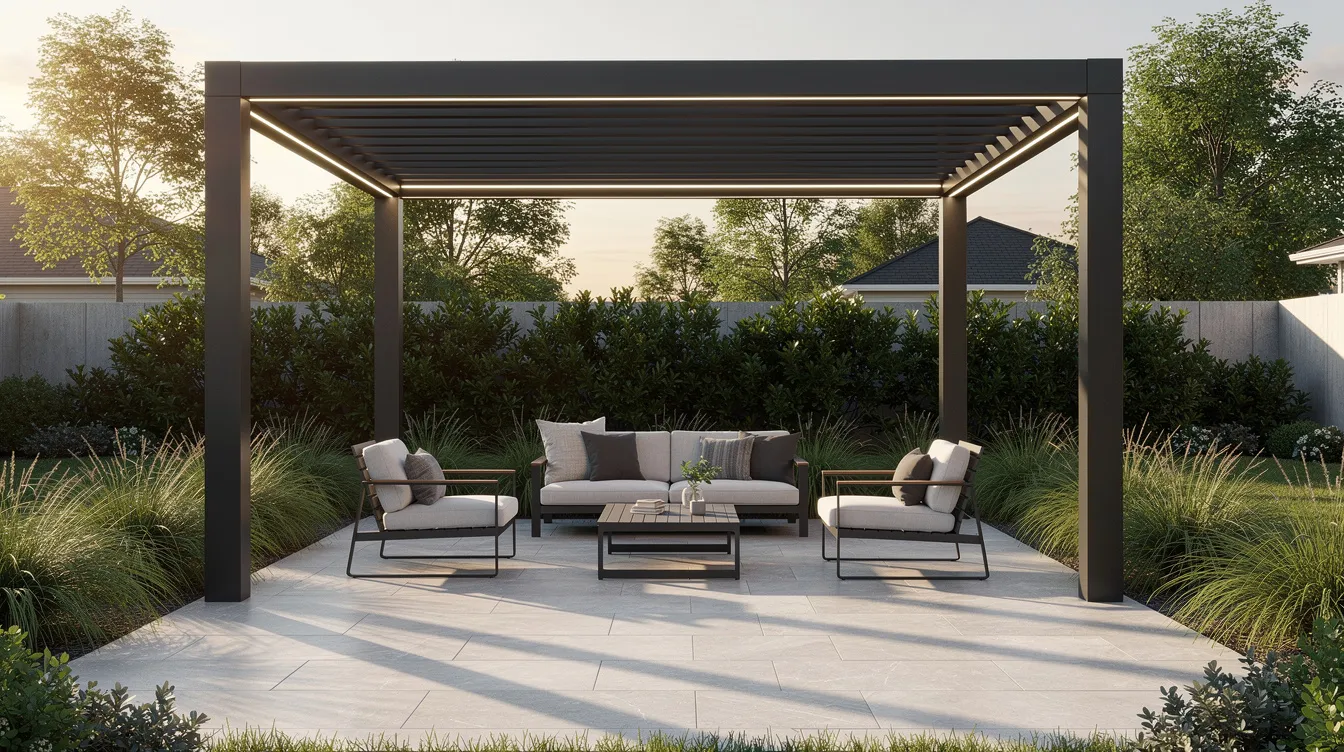
Designing for Arizona’s Desert Climate: Plants, Shade, and Water Efficiency
Successful landscape design in Gilbert, Mesa, and surrounding East Valley communities blends beauty with water efficiency and heat management. The desert doesn’t limit your options-it shapes them, and there are many creative landscaping ideas for Arizona backyards that embrace these conditions.
Right Plant, Right Place
Low-maintenance landscapes utilize native plants suited to local climates. In the Sonoran Desert, that means species like Texas sage, desert spoon, palo verde, lantana, desert willow, agave, and ocotillo-all found on the Arizona Department of Water Resources Low Water Use plant lists. Sustainable landscaping uses native plants to reduce water usage because these species evolved to thrive on minimal irrigation once established.
Shade Strategies
Pergolas, ramadas, and attached patio covers block harsh west sun. Strategically placed fast-growing desert trees create natural canopy. The goal is to preserve winter sunlight (those cool-season months are when the yard gets the most use) while cutting summer heat.
Water Efficiency
Outdoor water use can account for up to 70 percent of residential water consumption in Arizona. Efficient irrigation-drip systems, smart controllers, proper hydrozoning-is non-negotiable. Mulching helps retain soil moisture and suppress weeds, and composting enriches soil and reduces waste in planting beds. Rain gardens filter stormwater and support biodiversity, and passive rainwater harvesting (swales, contouring, collecting roof runoff) supplements irrigation after monsoon rains. Sustainable landscaping promotes soil health through organic practices that build healthier root zones over time.
Ground Materials
Light-colored pavers, decomposed granite, and gravel reduce heat buildup compared to dark surfaces. These materials also cut dust and provide a clean, modern ground plane that complements desert plantings.
Hardscape Design: Patios, Pathways, and Outdoor Living Foundations
Hardscaping includes non-plant elements like patios and walkways-the structural bones that define how you move and live in your outdoor space. A well-designed hardscape can improve curb appeal instantly and set the stage for every other feature.
Common materials for East Valley projects:
|
Material |
Best For |
Key Advantage |
|---|---|---|
|
Concrete pavers |
Patios, paths, driveways |
Cost-effective, many shapes and colors, easy to replace individual units |
|
Travertine |
Pool decks, patios |
Naturally cool underfoot, premium look |
|
Porcelain tile |
Modern outdoor rooms |
Sleek, stain-resistant, consistent finish |
|
Natural flagstone |
Pathways, rustic patios |
Unique character, extremely durable |
|
Decorative concrete |
Budget-friendly patios |
Stamped or exposed aggregate options |
Pavers are a popular choice for hardscaping driveways and patios because they allow future repair without tearing up the entire surface. Hardscaping can enhance outdoor living spaces significantly when the layout accounts for real life: dining tables need clearance (48 to 60 inches for comfortable circulation), pool decks need non-slip surfaces, and pathways need to connect every daily route-house to pool, side yard to trash cans, back gate to parking.
Pathway lighting improves safety by reducing trip hazards, especially on steps. Speaking of steps, code-compliant risers (typically no more than 7.5 inches) and ADA-friendly slopes keep the yard accessible. Retaining walls and seat walls handle grade changes on gently sloped East Valley lots while doubling as informal seating around gathering areas. Hardscaping elements can increase property value and usability far beyond their initial cost.
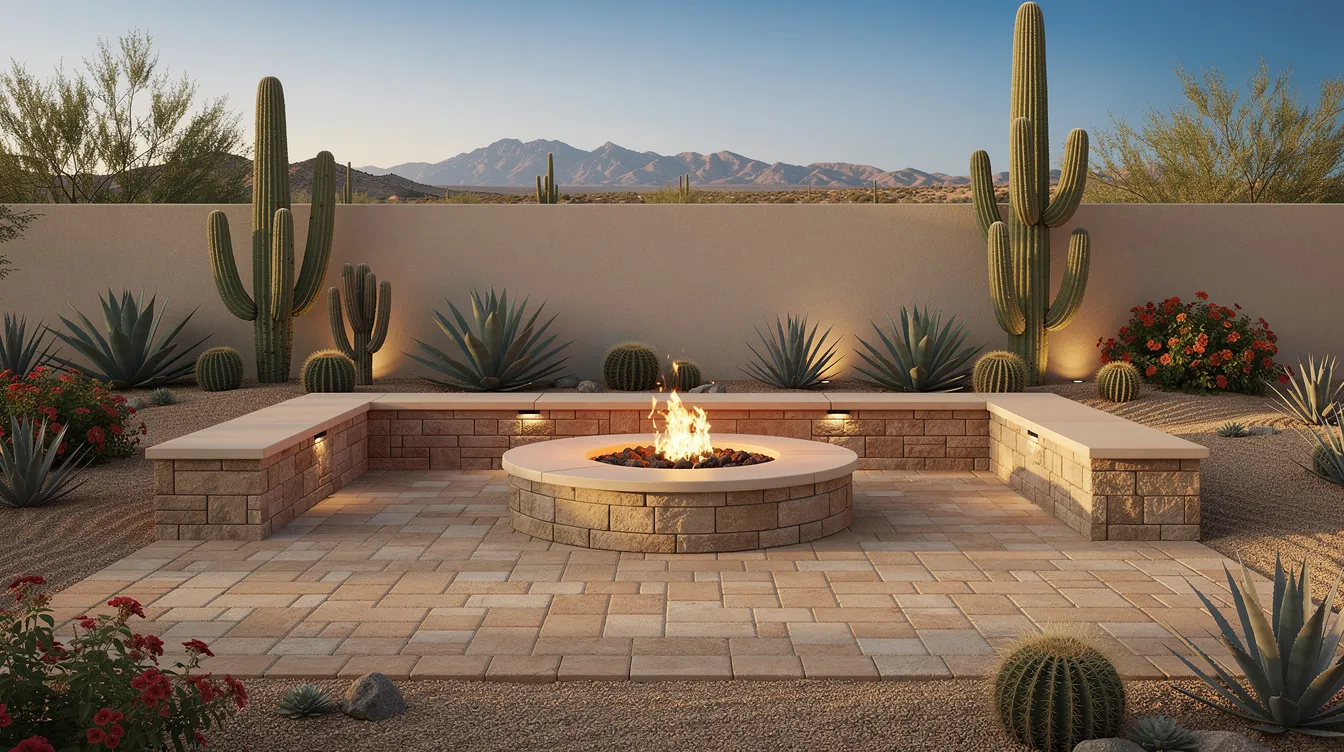
Garden Design: Low-Maintenance Beauty for Your Front and Back Yard
Garden design in Arizona doesn’t mean high-maintenance lawns and English flower beds. It means structured, water-wise plantings that deliver color, texture, and seasonal interest without daily upkeep, often inspired by easy low-maintenance landscaping ideas for Arizona yards. Understanding maintenance requirements is essential when planning landscape features, and the best designs build in simplicity from the start.
Front yard strategies:
-
Layered plantings: groundcovers, mid-size shrubs, accent trees arranged in tiers
-
Specimen cacti and accent boulders for architectural interest
-
Landscape lighting to create curb appeal after dark
-
Rock and gravel palettes that comply with HOA color requirements
Backyard strategies:
-
Privacy screening with trees and shrubs along fence lines
-
Planting beds that soften hardscape edges and pool decks
-
Drought-tolerant perennials, shrubs, and desert trees providing seasonal flowers, texture, and color
-
Containers and raised planters for herbs or seasonal annuals near outdoor kitchens, making the space both functional and beautiful
Mesquite Landscaping, Inc. focuses on low maintenance plant selections that thrive with minimal intervention, designed by some of the best landscape designers at Mesquite Landscaping, Inc.. The style matches the natural desert-artistic without being fussy, practical without being plain.
Creating Outdoor Living Spaces: Kitchens, Dining, and Lounges
The shift from simple concrete slabs to full outdoor living rooms has been one of the biggest trends in Arizona homes built or renovated since around 2010. Today’s backyards are extensions of the home-complete with cooking, dining, lounging, and entertainment zones.
Outdoor kitchens enhance outdoor living spaces significantly. A well-designed outdoor kitchen can include features like grills, sinks, and refrigerators, plus counter space, weather-proof storage cabinets, and gas or electric hookups. Proximity to the indoor kitchen matters for plumbing and gas codes, and it also makes life easier when you’re carrying plates back and forth.
Zoning the yard for different uses:
-
Dining near the kitchen door for easy serving
-
Lounge seating near fire pits or an outdoor TV
-
Quiet reading nooks under pergolas or shade trees
-
Play areas visible from the main patio for families
3D landscape design helps homeowners decide exactly where to place televisions, ceiling fans, heaters, and lighting within outdoor living structures-decisions that are much harder to change after the concrete is poured. Outdoor kitchens increase property value and usability, making them one of the highest-return features in East Valley backyards. Mesquite Landscaping, Inc. coordinates all utilities-gas, electric, water-as part of the design-build scope.
Fire Pits, Fireplaces, and Nighttime Ambiance
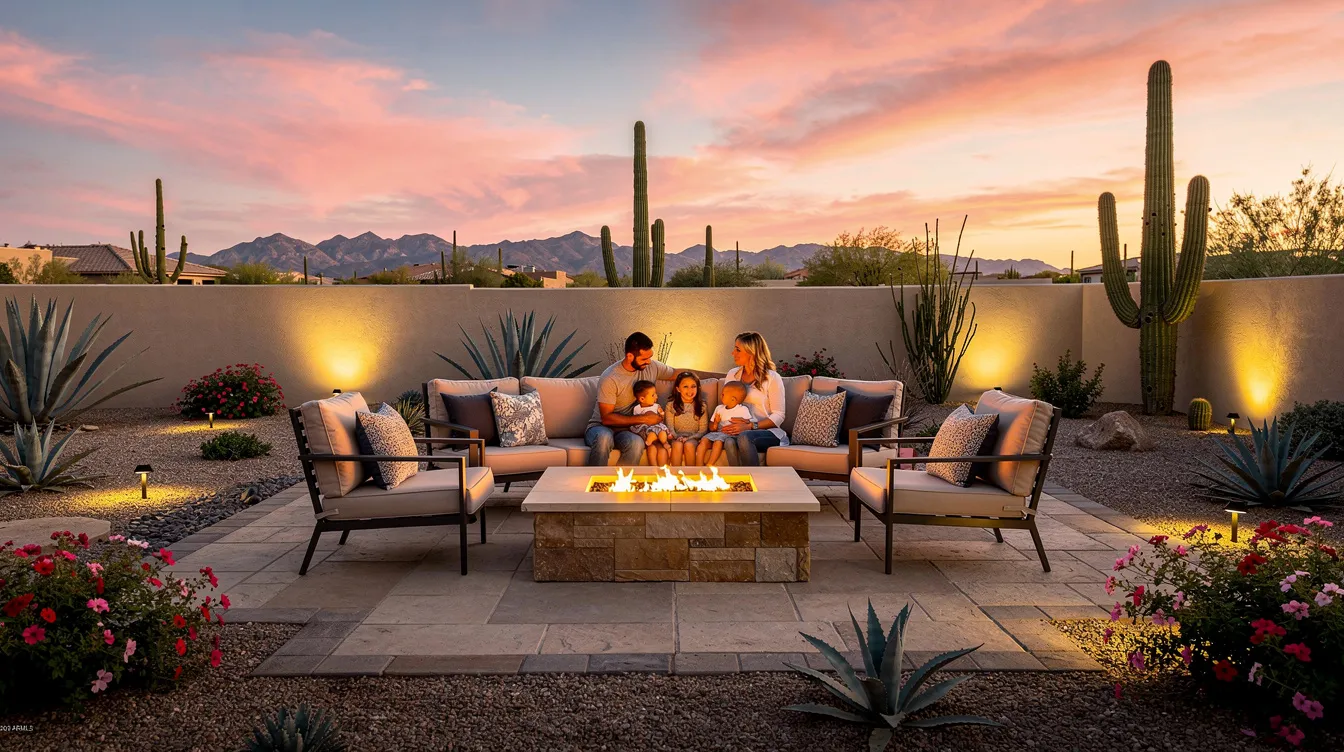
Fire features extend outdoor living into the cooler Arizona evenings that stretch from October through April. They also serve as major focal points-the place where everyone naturally gravitates after dinner. Custom fire pits enhance outdoor living spaces significantly, and they’re one of the most-requested features in East Valley projects.
Design options from Mesquite Landscaping, Inc.:
-
Built-in gas fire pits with clean, modern lines
-
Linear fire features integrated along seating walls
-
Full outdoor fireplaces for more formal settings
-
Fire pits can be fueled by wood, gas, or propane depending on the homeowner’s preference and local code
Fire pits can be designed in various styles and materials-from rustic stacked stone to sleek concrete and metal. Fire pits require proper installation for safety and functionality, including code-mandated clearances from structures, wind considerations (sparks in the open desert), and choosing materials that handle sustained heat without cracking.
Fire pits can be integrated with seating areas for comfort. Curved or straight seat walls, built-in bench space, and room for lounge furniture are all planned around sight lines-views back to the house, out toward mountains, or into the sunset. Paired with low-voltage landscape lighting highlighting trees, paths, and architectural elements, a fire feature turns a yard into a resort-like retreat after dark.
Pergolas, Shade Structures, and Comfort in the Arizona Sun
If you want to use your yard from May through September, effective shade design is not optional-it’s the difference between an outdoor space that gets used and one that doesn’t. Pergolas provide partial shade in outdoor spaces while still allowing filtered light and air circulation, and choosing between steel or Alumawood pergola materials helps tailor that shade to Arizona’s extreme sun.
Types of shade structures:
-
Freestanding pergolas
-
Attached patio covers
-
Ramadas (open-air shelters)
-
Shade sails for flexible, modern coverage
Orientation matters enormously. East and west sun angles dictate where structures are placed, and whether solid roofs or angled slats deliver the best balance of shade and light. Wooden pergolas are a popular choice for homeowners seeking a warm, natural aesthetic, though aluminum and composite options handle Arizona’s UV exposure with less maintenance. They can be used to support climbing plants like bougainvillea for added coverage and color. They can enhance the aesthetic appeal of gardens while adding genuine function.
Integration details-ceiling fans, recessed lighting, heaters for winter, and mounted TVs-are planned during the design stage, not bolted on later. Pergolas can increase property value when well-designed and built to last.
A note on regulations: Arizona’s HB 2342, effective in 2026, prevents HOAs from prohibiting backyard shade structures. HOAs may impose reasonable rules about size, placement, or appearance, but they cannot ban pergolas, awnings, or gazebos outright. Mesquite Landscaping, Inc. helps homeowners navigate these guidelines during the design process.
Artificial Turf vs. Natural Lawn: Choosing the Right Surface
Artificial turf requires less water than natural grass-dramatically less, in a state where every gallon counts, which is why it’s a core feature in many new construction landscape design projects in Gilbert. But the decision isn’t purely about water. Here’s how the two compare in East Valley conditions:
|
Factor |
Artificial Turf |
Natural Grass |
|---|---|---|
|
Installed cost |
$8–$16 per sq ft |
$2–$6 per sq ft |
|
Annual maintenance |
$50–$200 |
$1,800–$3,500 (water, mowing, fertilizer) |
|
Lifespan |
15–25 years |
Requires frequent reseeding/replacement |
|
Summer surface temp |
Can be very hot |
Cooler underfoot |
|
Water use |
Near zero |
~55 gal/sq ft/year |
Installation of artificial turf can reduce maintenance costs substantially, and artificial turf can last 15 to 20 years with proper care. Artificial turf is available in various colors and textures, making it possible to match the look of natural Bermuda or rye grass. Artificial turf can improve property value and curb appeal, particularly in communities where water-conscious landscaping is valued.
Mesquite Landscaping, Inc. designs turf areas for specific uses-kid and pet play zones, putting greens, and accent lawns framed by planting beds and hardscape. Key installation considerations include proper base preparation, drainage layers, and choosing cooling infill to manage surface temperatures.
For homeowners who insist on some natural lawn, the design pairs limited turf with efficient irrigation and shade where possible. Either way, surrounding the turf with xeriscape plantings and gravel maintains a desert-appropriate, modern aesthetic while providing usable green space.
Water Features, Lighting, and Finishing Touches
Water features and lighting turn a well-designed yard into an immersive experience-the kind of space that looks and feels complete rather than like a work in progress.
Water features in Arizona must use recirculating systems to conserve water. Design options include modern wall scuppers flowing into pools, standalone fountains, and small reflecting ponds. Placement in partially shaded areas helps reduce evaporation, and properly sized basins minimize splash loss.
Landscape lighting is where the yard comes alive after sunset. Effective landscape design incorporates outdoor lighting for safety and ambiance. LED landscape lights use 75 percent less energy than traditional bulbs, making them both practical and sustainable. Quality LED landscape lighting includes:
-
Path lights along walkways and steps
-
Uplights on trees and architectural features
-
Step lights for elevation changes
-
Downlighting from pergolas for dining and lounge areas
Well-placed lights can highlight architectural features effectively, and landscape lighting enhances outdoor aesthetics and safety. Proper lighting can increase property value by up to 20 percent-a meaningful return on a relatively modest investment.
Finishing touches include decorative gravel blends, accent boulders, metal edging, statement planters, and details like house-number accents or mailbox upgrades. Consistent materials and colors create cohesion from the street to the back fence.
Irrigation Systems and Smart Water Management
In Arizona’s climate, a well-designed irrigation system is as important as the plants themselves. Irrigation systems deliver water directly to plants where it’s needed, eliminating the waste of broadcast watering across rock and hardscape. Drip irrigation can reduce water usage by 30 to 50 percent compared to traditional spray heads.
How Mesquite Landscaping, Inc. approaches irrigation:
-
Hydrozoning: Plants with similar water needs are grouped together. Turf gets spray heads; shrubs and trees get drip emitters; cacti and succulents get minimal supplemental water. Sprinkler systems can cover large areas efficiently when turf zones require it.
-
Smart controllers: Weather-based or soil-moisture-based controllers adjust watering schedules automatically by season, temperature, and rainfall. Automated irrigation systems save time and labor costs for homeowners who don’t want to manually adjust timers every few weeks.
-
Soil improvement: Organic amendments improve water retention in Arizona’s poor, alkaline soils, and mulch layers reduce evaporation while moderating soil temperature.
Irrigation systems can improve plant health and growth by delivering consistent, appropriate moisture. The system design is coordinated with the overall landscape plan to avoid future conflicts-drip lines routed around hardscape footings, tree root zones planned away from paver bases, and pipe crossings documented so nothing gets severed during future additions.
Proper irrigation protects the homeowner’s investment by reducing plant loss and preventing overwatering issues that attract pests or cause root rot.
Working With Landscape Architects and Designers: Roles and Credentials
When should you hire a licensed landscape architect versus a design-build contractor? The answer depends on the scope and complexity of your project.
A licensed landscape architect has a degree and state certification. They’re typically required for larger commercial sites, public spaces, or residential projects involving complex grading, drainage engineering, or permitting. Their skills include preparing official construction documents and managing code compliance at a technical level.
For most East Valley residential projects-backyards, front yards, outdoor kitchens, fire pits, pergolas-a specialized design-build firm like Mesquite Landscaping, Inc. handles the full scope: planning, visualization, permitting, and construction. This approach gives homeowners a single point of contact and unified responsibility.
When evaluating any landscape company, look for:
-
Proof of insurance and proper licensing
-
A portfolio of local projects (evaluating a designer’s past projects is critical to ensure style alignment with your vision)
-
Reviews from previous clients
-
Clear communication about the design process and timeline
Don’t choose based on the lowest bid alone. The cheapest proposal often cuts corners on base preparation, drainage, or material quality-problems that surface months after the crew leaves.
Mesquite Landscaping, Inc. brings a team of experienced designers, project managers, and installation crews who work together from concept through completion. Browse the project gallery to review past work and see the level of detail in finished projects.
What to Expect When You Hire Mesquite Landscaping, Inc.
The client experience is built around collaborative design, clear communication, and turnkey construction handled by one company. You won’t need to coordinate between a designer, a contractor, a plumber, and an electrician-Mesquite Landscaping, Inc. manages all of it.
Typical scheduling for East Valley projects:
-
Design and 3D visualization: 1–3 weeks
-
HOA and city approvals: 2–6 weeks depending on municipality and association requirements
-
Material ordering (stone, cabinetry, custom elements): lead times vary
-
Build phase: simple front yard refreshes take 1–2 weeks; full backyards with outdoor kitchens, pergolas, lighting, and fire features take 4–8 weeks or more
Documentation you’ll receive:
-
3D renderings and video walkthroughs
-
Plant and materials lists with species, sizes, and quantities
-
Construction details for structures (outdoor kitchens, pergolas, walls) when applicable
The team maintains regular communication during construction through progress updates, on-site walk-throughs, and a final punch list to make sure every detail matches the approved design. The goal is straightforward: deliver a finished space so the homeowner gets exactly the dream yard they saw in 3D. Landscape design enhances outdoor space usability and aesthetic cohesion-and that’s what you should expect to walk into when the crew wraps up.
Cost, Timelines, and How to Plan Your Landscape Investment
Costs vary by scope, but having a master landscape design plan helps phase projects and control budget. Here are high-level, non-binding ranges for common East Valley projects:
|
Project Type |
Typical Range |
|---|---|
|
Simple front yard refresh (rock, plants, drip irrigation) |
$5,000–$15,000 |
|
Full backyard (hardscape, pergola, fire pit, planting, lighting) |
$20,000–$60,000+ |
|
Outdoor kitchen addition |
$10,000–$30,000 additional |
|
Artificial turf (1,000 sq ft installed) |
$8,000–$16,000 |
Actual proposals are customized based on your property, materials, and feature selection. For more detailed guidance, see the landscape budget planning guide.
Timeline guidance:
-
Spring and fall are the busiest seasons in Arizona-schedule early if you have a target date like a graduation party, holiday gathering, or new-build move-in.
-
Start with infrastructure: grading, drainage, irrigation, major hardscape. These form the foundation that later phases-plants, lighting, accessories-integrate into smoothly.
-
Phasing is completely normal. A master plan lets you build in stages without reworking earlier investments.
Every landscape is an investment. Treat it like one by planning ahead and working with a team of custom landscape design and install experts in Gilbert that delivers the quality and detail your property deserves.
How to Get Started: Book Your Free Landscape Design Consultation
If you’re an East Valley homeowner ready to stop imagining and start building, the first step is simple: contact the best landscape design company in Arizona and schedule a free on-site consultation with Mesquite Landscaping, Inc.
Here’s what happens when you reach out:
-
A brief discovery call to discuss your goals, budget range, and timeline
-
An on-site visit to your property where the team measures, evaluates, and gathers site-specific data
-
The design process begins-concept development, 3D renderings, and a custom design proposal you can review before committing
Mesquite Landscaping, Inc. serves Gilbert, Queen Creek, Mesa, Chandler, San Tan Valley, Gold Canyon, and surrounding areas such as Florence, AZ, where they provide full landscaping design services. Homeowners in nearby communities are welcome to inquire as well. If you have existing builder plans, lot plots, or photos of your yard, share them ahead of time so the design team can come prepared with ideas.
Whether your wife has a Pinterest board full of outdoor kitchen dreams, or you’ve been sketching fire pit layouts on napkins, or you simply know you want a yard that doesn’t waste water and actually gets used-this is how you begin. Contact the customer care team or visit the landscape design packages page to see what each package includes.
Your yard is one of the biggest canvases you own. Let’s design it around how you actually live.
FAQ: Landscape Design Services in Arizona’s East Valley
How long does a typical residential landscape design and build project take?
Simple front yard projects may take just a few weeks from design approval to completion, while full backyards with outdoor kitchens, fire pits, and pergolas can stretch to several weeks or a couple of months depending on scope, material lead times, and season. The design and 3D visualization phase itself typically takes one to three weeks. Add two to six weeks for HOA and city approvals when required, and then the build phase begins. Planning early-especially before the busy spring and fall windows-helps keep your timeline on track.
Do I really need a full design if I only want to redo part of my yard?
Even small projects benefit from a scaled plan. Without one, you risk placing a new patio where irrigation lines will need to run later, or choosing materials that won’t match the next phase. A master plan ensures drainage, utilities, and circulation are accounted for from the start. Mesquite Landscaping, Inc. can create a comprehensive plan and then build it in phases, so homeowners spread out the investment without any DIY guesswork or costly rework.
Can you work with my existing pool, patio, or builder-installed landscaping?
Absolutely. Mesquite Landscaping, Inc. frequently designs around existing pools and patios, upgrading the surrounding hardscape, planting, and outdoor living features to form a cohesive landscape. During the on-site visit, the design team evaluates what should be kept, modified, or replaced. The goal is to review every aspect of your existing landscape and build a plan that makes the whole yard feel unified-not like a patchwork of separate projects.
What if my HOA has strict rules about front yard landscaping?
The company regularly works with HOAs across Gilbert, Queen Creek, Mesa, and Chandler and understands the typical association guidelines for rock colors, approved plant types, tree placement, artificial turf visibility, and screening requirements. Mesquite Landscaping, Inc. prepares plans and plant lists formatted for HOA submission and helps homeowners navigate the approval process. This support saves time and avoids rejection letters that delay the project.
Is your landscape design service only for large, high-budget projects?
Not at all. While Mesquite Landscaping, Inc. specializes in comprehensive outdoor living transformations, the team also handles modest front or back yard upgrades-a new garden design with desert-adapted plantings, a simple fire pit and patio, or an irrigation overhaul. The best way to find out what’s realistic for your budget is to request a free consultation. The team will discuss your goals, assess the scope, and propose solutions that align with your resources-whether that’s a focused refresh or a complete dream yard build.
