

Introduction to Landscaping Ideas in the East Valley
The East Valley cities of Gilbert, Mesa, and Queen Creek offer unique climates and landscapes that make creating beautiful residential landscapes both exciting and rewarding. Whether you’re looking to boost curb appeal or create a serene backyard retreat, understanding the latest yard landscaping ideas tailored to this region will help you transform your outdoor space into a stunning oasis. From embracing desert-friendly plants to incorporating shade elements for those hot Arizona summers, this guide will inspire you to enhance your property’s beauty and value.
Planning Your Yard Landscape for Gilbert, Mesa, and Queen Creek
Before planting flower beds or arranging plants, evaluate your yard’s specific conditions. The East Valley’s intense sun and long growing season mean selecting plants that thrive in full sun or partial sun is crucial. Consider soil quality and whether your site has a steep slope, which may require terracing or retaining walls made of stone or gravel to prevent erosion and add structure.
Think about your lifestyle: Do you want a space for entertaining, quiet relaxation, or growing herbs and fruit trees? Planning planting areas with these uses in mind will create functional outdoor rooms that complement your home’s style and the natural surroundings of the Sonoran Desert.
Enhancing Curb Appeal with Local Flair
In Gilbert, Mesa, and Queen Creek, curb appeal often starts with a welcoming front door accented by colorful flower beds and front yard landscaping that uses native, drought-tolerant plants such as desert marigolds or agave. Japanese maples and other shade-loving trees can add striking foliage color and provide relief from the sun’s heat near the front porch.
Raised garden beds filled with herbs like rosemary and thyme not only add beauty but also bring life and fragrance to your entryway. Using gravel in your Arizona landscape or stone mulch in planting areas can create a clean background that emphasizes the brighter colors of your flowers and shrubs. Adding hanging baskets or window boxes bursting with vibrant blooms adds personality and charm to your front yard.
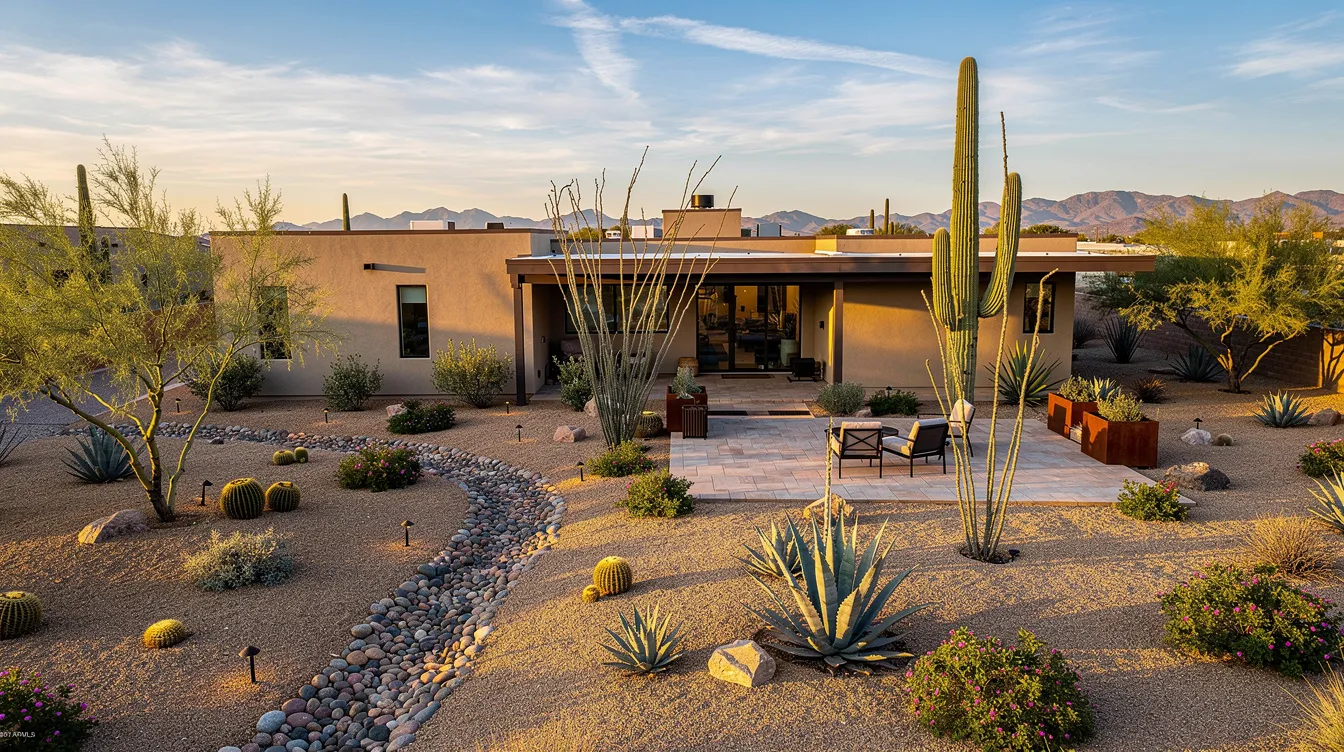
Creating Functional Outdoor Spaces for East Valley Living
Design your backyard to maximize enjoyment during the long, warm summers typical of Mesa and Queen Creek, considering custom water features and fountains for Queen Creek homes to add movement and sound. Incorporate shaded seating areas using pergolas or shade sails to provide relief from the sun. Fire pits or outdoor fireplaces can extend your outdoor living season into cooler evenings, creating a cozy atmosphere.
Water features like small fountains or meandering streams add the soothing sound of moving water, enhancing the natural beauty of your landscape. Raised beds are ideal for growing vegetables, herbs, and fruit trees, making it easy to tend to your garden without bending over. Arrange plants to create a balance of shapes and textures, mixing drought-tolerant succulents with lush foliage for year-round interest.
Designing Beautiful Residential Landscapes with Local Plants
Incorporate native plants and climate-adapted species to ensure your landscape thrives with minimal maintenance. Japanese maples can provide dramatic foliage color, while fruit trees like citrus add both beauty and bounty. Use layering techniques by combining ground covers, perennials, shrubs, and trees to create depth and structure.
Pathways made of stone or gravel can guide visitors through your garden, connecting different planting areas and outdoor rooms. Consider the shapes and sizes of your plants to maintain visual balance and avoid overcrowding. Using a consistent color palette that complements your home’s exterior will unify your landscape and create harmony.
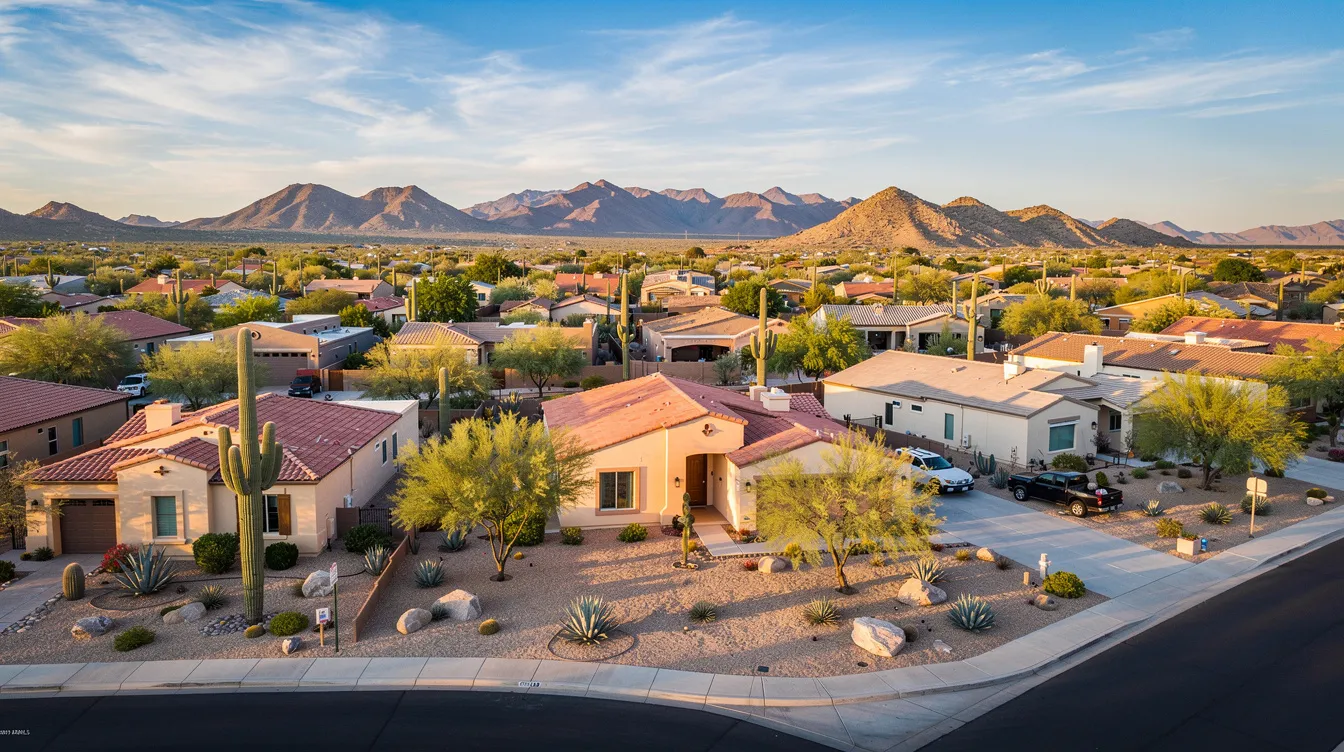
Outdoor Living Spaces Tailored to Your East Valley Home
Extend your indoor living space outdoors with comfortable seating, dining areas, and cooking stations. A patio with stone or gravel flooring in one of the best paver patterns for your home can anchor your outdoor room, while potted plants add color and life without taking up too much space.
Incorporate outdoor lighting to highlight focal points such as a wall with climbing vines or a beautiful tree near your front door. This not only enhances safety but also adds ambiance for evening gatherings. Consider adding a kitchen or grill area to enjoy alfresco dining under the stars.
Maintenance and Upkeep for Desert Landscapes
Choose low-maintenance plants native to the Gilbert, Mesa, and Queen Creek area to reduce water use and upkeep. Choosing the right gravel and mulch for Arizona landscapes and then mulching flower beds with gravel or stone can suppress weeds and retain moisture. Use drought-tolerant, low-maintenance landscaping ideas for Arizona yards such as drought-tolerant shrubs and ground covers to minimize irrigation needs during the hot summer months.
Regularly prune fruit trees and herbs to encourage healthy growth and maximize your growing season. Incorporate shade elements to protect delicate plants from intense sun and create microclimates that support a wider variety of species.
Budgeting and Planning Your East Valley Landscape Project
Determine your budget early, explore flexible landscape financing options for East Valley homeowners, and research materials and plants that fit your financial plan. Hiring a local landscape design company in Arizona familiar with the East Valley’s climate and soil conditions can save time and money by recommending the best plants and features for your site.
Consider DIY projects such as building raised beds or installing gravel pathways to reduce labor costs. Utilize online landscaping software to visualize your design and make adjustments before purchasing materials.
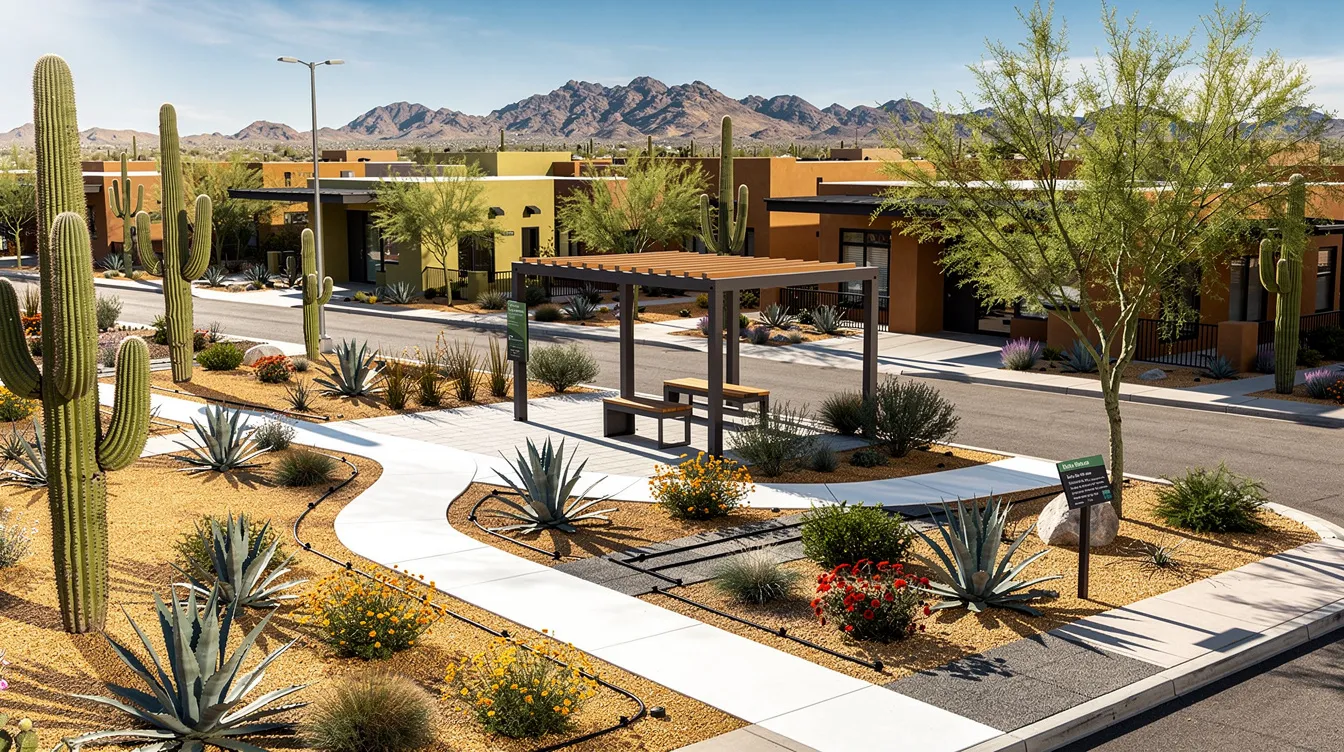
By embracing the natural beauty and climate of Gilbert, Mesa, and Queen Creek, you can create beautiful residential landscapes that enhance your home’s value and provide year-round enjoyment. From thoughtfully planned planting areas to functional outdoor living spaces that draw inspiration from a landscape project gallery of Arizona homes, your yard can become a vibrant extension of your lifestyle and a peaceful retreat amid the desert landscape.
FAQs
Q: What are the characteristics of modern landscaping?
A: Modern landscaping features straight lines and sharp angles with few to no flowers, emphasizing heights and textures for a sleek, minimalist look.
Q: How does traditional landscaping differ from modern landscaping?
A: Traditional landscaping is characterized by curving lines, rounded corners, and a greater variety of flowers with brighter colors, creating a more classic and colorful garden.
Q: What defines formal landscaping?
A: Formal landscaping emphasizes recognizable shapes and patterns, geometric groupings, and symmetry, often using polished materials to create an elegant and structured appearance.
Q: What is informal landscaping?
A: Informal landscaping features naturalistic groupings of plants without recognizable shapes or patterns, often utilizing humble materials for a relaxed and organic feel.
Q: What elements are common in contemporary landscaping?
A: Contemporary landscaping combines elements from various styles, often featuring clean lines and neutral tones with a focus on hardscaping to create a modern yet inviting outdoor space.
Q: What characterizes cottage gardens?
A: Cottage gardens are dense and colorful, informal plantings often mixing flowering plants and shrubs to create a charming, lush garden atmosphere.
Q: How does Mediterranean landscaping create its inviting atmosphere?
A: Mediterranean landscaping incorporates organic shapes, warm tones, and a mix of flowering plants, resulting in a casual and welcoming outdoor space.
Q: What materials and plantings are typical in rustic landscaping?
A: Rustic landscaping emphasizes natural materials like wood and gravel and informal plantings with a variety of textures to evoke a natural, earthy feel.
Q: How can homeowners reduce maintenance in their landscapes?
A: Replacing high-maintenance lawns with alternative ground covers and incorporating hardscaping elements like gravel paths and patios can reduce the need for chemicals, watering, and upkeep.
Q: What is xeriscaping?
A: Xeriscaping is a landscaping method that reduces or eliminates irrigation needs by using drought-resistant plants and efficient landscaping techniques, ideal for water conservation.
Q: What are structural plantings in landscaping?
A: Structural plantings use large trees and evergreens to provide year-round interest and help frame the house within the landscape design.
Q: What are effective focal points in a landscape design?
A: Focal points can include sculptures, dramatic trees, or water features that serve as visual anchors and draw attention within the garden.
Q: What makes Japanese gardens unique?
A: Japanese gardens emphasize minimalism and natural elements to create serene, contemplative outdoor spaces.
Q: How do water features enhance a landscape?
A: Water features create soundscapes that can mask urban noise and enhance sensory experiences, adding tranquility and interest to the garden.
Q: Why is texture variety important in landscaping?
A: Mixing coarse, medium, and fine textures creates depth and visual interest, making the landscape more dynamic and appealing.
Q: What are vertical gardens?
A: Vertical gardens maximize small spaces by utilizing walls or fences for planting, adding greenery without taking up ground space.
Q: How can color palettes affect garden mood?
A: A consistent color palette can evoke specific moods; for example, cool blues create calmness, while warm reds add energy.
Q: What are current top trends in landscaping?
A: Top trends include modern minimalism, incorporating water features, and vertical gardening, especially for small spaces.
Q: How can window boxes enhance a garden?
A: Window boxes provide high-impact gardening projects that change with the seasons, adding color and charm to the home’s exterior.
Q: Why is defining spaces with edging beneficial?
A: Edging provides structure to the garden, making it look neater and more organized.
Q: What plant types should be chosen for front yards?
A: A mix of trees, shrubs, perennials, and ground cover plants that thrive locally should be chosen for a healthy and attractive front yard.
Q: How does mulching help garden beds?
A: Mulching suppresses weeds and retains moisture, reducing maintenance and supporting plant health.
Q: What safety factors should be considered in front yard landscaping?
A: Lighting and spacious walkways improve safety by increasing visibility and ease of movement.
Q: What is foundation planting?
A: Foundation planting involves creating engaging plantings near the home’s base to soften and enhance the facade.
Q: How can soil quality be improved for landscaping?
A: Evaluating and amending soil can improve drainage and create better growing conditions for plants.
Q: How does permeable paving benefit the landscape?
A: Permeable paving allows natural drainage, helping to protect soil and reduce runoff.
Q: What types of water features can be included in a landscape?
A: Water features can range from small fountains and meandering streams to large-scale waterfalls.
Q: What hardscaping projects are common in residential landscaping?
A: Common projects include retaining walls, patios, paths, and decorative boulders.
Q: How can swimming pools enhance outdoor living?
A: Swimming pools provide relaxation and entertainment opportunities, becoming focal points in the backyard.
Q: How do bold lines and forms function in landscaping?
A: They guide movement and help define spaces within the garden, creating a sense of order and flow.
Q: What makes a residential landscape beautiful?
A: A beautiful residential landscape combines artistic design principles and functional components to create harmonious, usable outdoor spaces.
Q: How can height be added to a landscape for visual interest?
A: Using planters and baskets can add height and dimension, enhancing the overall appeal of the garden.